TERM 1 · WEEK 6
Local History Trail
Build Strong Systems
ENGLISH
Punctuation & Apostrophes
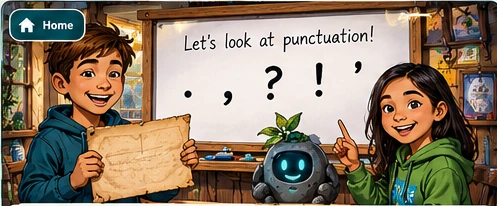
01 · WorkshopPunctuation helps readers understand writing. An apostrophe can show who owns something. Let’s try it with one owner at a time.
WHAT AM I LEARNING?
Use apostrophes to show singular possession.
Correct: the guides map; the schools gate; Hanas notebook; the museums sign; the towns bridge.
Need help? See the steps
Hana owns the notebook.
Hana’s notebook.
Hana is one owner. Add an apostrophe and s to the owner’s name: Hana + ’s. This tells us the notebook belongs to Hana.
Tap a punctuation mark to learn what it does.
PRACTISE · Who does it belong to?
ENGLISH
Sequencing Events & Finding Evidence
02 · LibraryRead the Local History Trail information first. Talk the idea through, then answer one small question at a time.
WHAT AM I LEARNING?
Sequence events from a short historical account and infer why a landmark matters.
Put the four events in date order. Which happened earliest? Why is the old bridge still remembered?
Need help? See the steps
Evidence is a clue from the text, picture or data that supports your thinking. An inference is an idea you work out from clues.
- STEP 1Read once to understand what it is mostly about.
- STEP 2Read the question again and find the part that helps.
- STEP 3Say your answer aloud using because, then check it against the text.
- STEP 4Record a useful clue from the source.
- STEP 5Explain what that clue tells you.
TEACH · Read this first
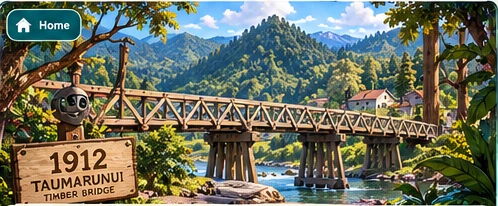
The Old Bridge Trail — 1912: The first timber bridge opens and links farms with the town. 1948: The bridge is repaired after a major flood. 1986: A new road bridge opens nearby. 2019: The old bridge is preserved as part of a walking trail. Today, signs beside the trail tell visitors how the old bridge helped people carry goods, reach school and visit neighbours before the new road was built.
CHECK THE TEXT · Find a clue
A clue from the text is called evidence.
ENGLISH
Writing a Chronological Paragraph
03 · Creative StudioYOUR WRITING JOB: Use the four supplied timeline notes to write a paragraph about how the local place changed over time. Use all four events and at least three time-order words.
WHAT AM I LEARNING?
Turn notes into a clear chronological paragraph.
Use the four supplied timeline notes to write a paragraph about how the local place changed over time. Use all four events and at least three time-order words.
Need help? See the steps
Start with the steps below. They show you what to look for and what to do. First get your ideas ready. Then build the writing one part at a time.
- STEP 1Introduce what you are writing about.
- STEP 2Give your first important idea.
- STEP 3Add another useful detail, reason or example.
- STEP 4Finish so the reader understands your message.
NEED TO GET YOUR IDEAS READY?
Choose any way that helps. These are optional — you can always do the whole mission on screen.
PRACTISE · Plan it one step at a time
SELF-CHECK · Check your work
This checklist helps you check your work. You do not have to tick every box to submit — the mission check looks at the work you created.
MATHS
Reading Grid References & Pathways
04 · Maths LabWork through one maths question at a time. Your answers will be checked before the next mission unlocks.
WHAT AM I LEARNING?
Use alphanumeric grid references to identify and plot positions on a grid map.
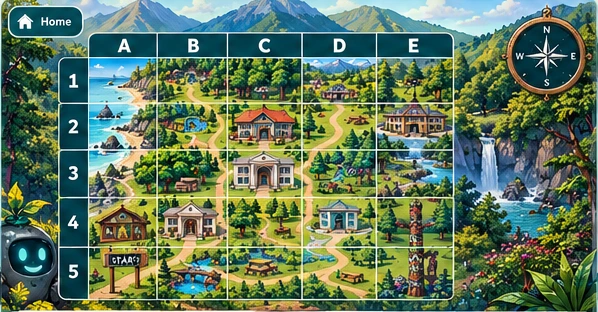
1) The museum is at C3. What is its grid reference? 2) The bridge is at C2. What is its grid reference? 3) Which square is column B, row 4? 4) Plot a library at A2 and record its grid reference.
Need help? See the steps
A grid reference identifies one square on a map. Read the letter first, then the number: C3 means column C, row 3.
- STEP 1Read the question and decide what you need to find.
- STEP 2Notice the important numbers and units.
- STEP 3Choose a strategy and work it out.
- STEP 4Type the answer, then check that it makes sense.
PRACTISE & SOLVE · One question at a time
Read → choose a strategy → work it out → check your answer. Correct answers stay correct if another question needs another go.
North ↑ · Columns run A–E from left to right. Rows run 1–5 from top to bottom. C2 is north of C3.
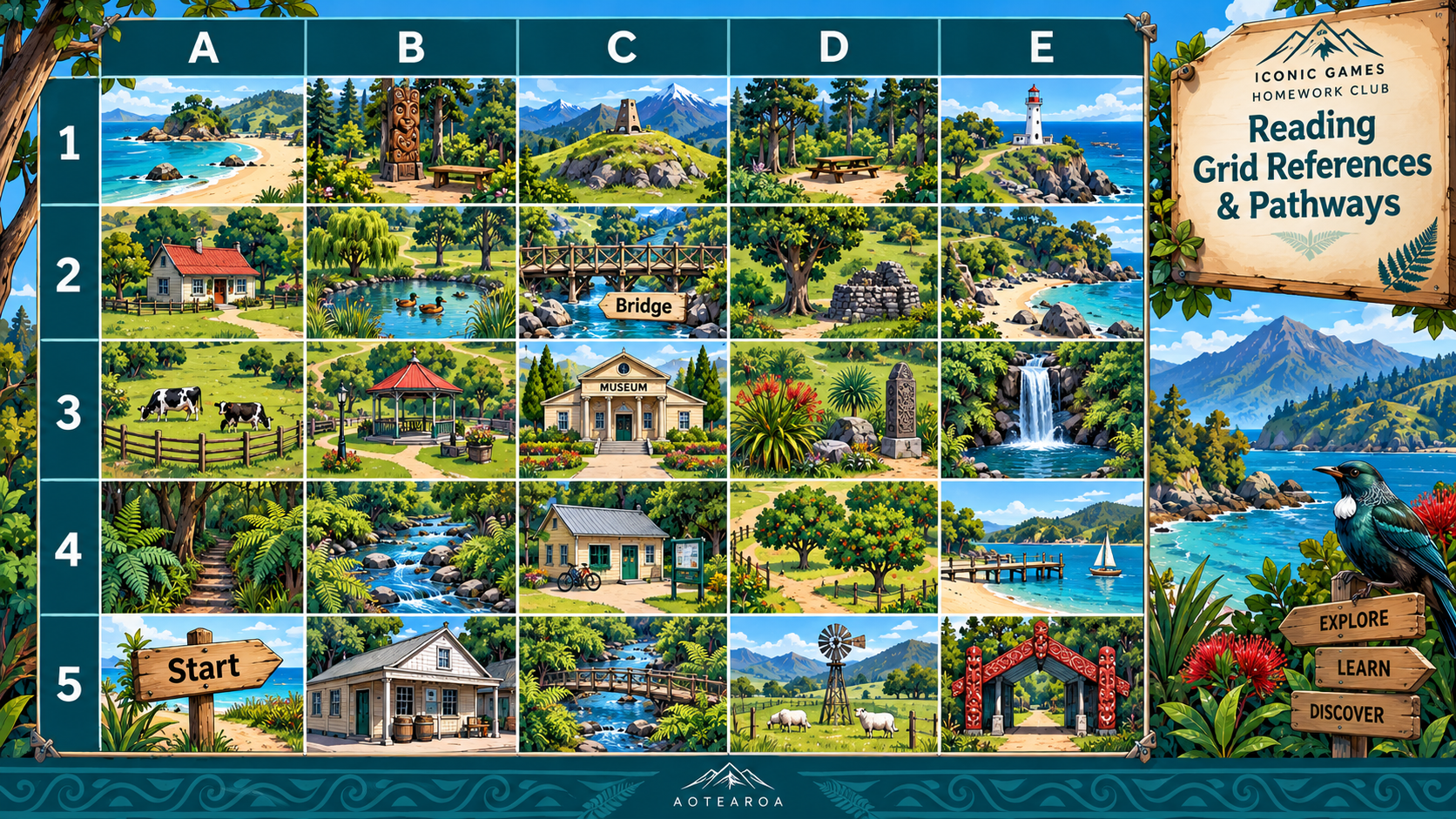
Tap a place on the illustrated map to explore its grid reference.
MATHS
Creating a Mapped Pathway
05 · Mission DeckThis is your real-world Local History Trail challenge. Work out what the problem asks you to find or make.
WHAT AM I LEARNING?
Identify, plot and communicate positions using alphanumeric grid references.
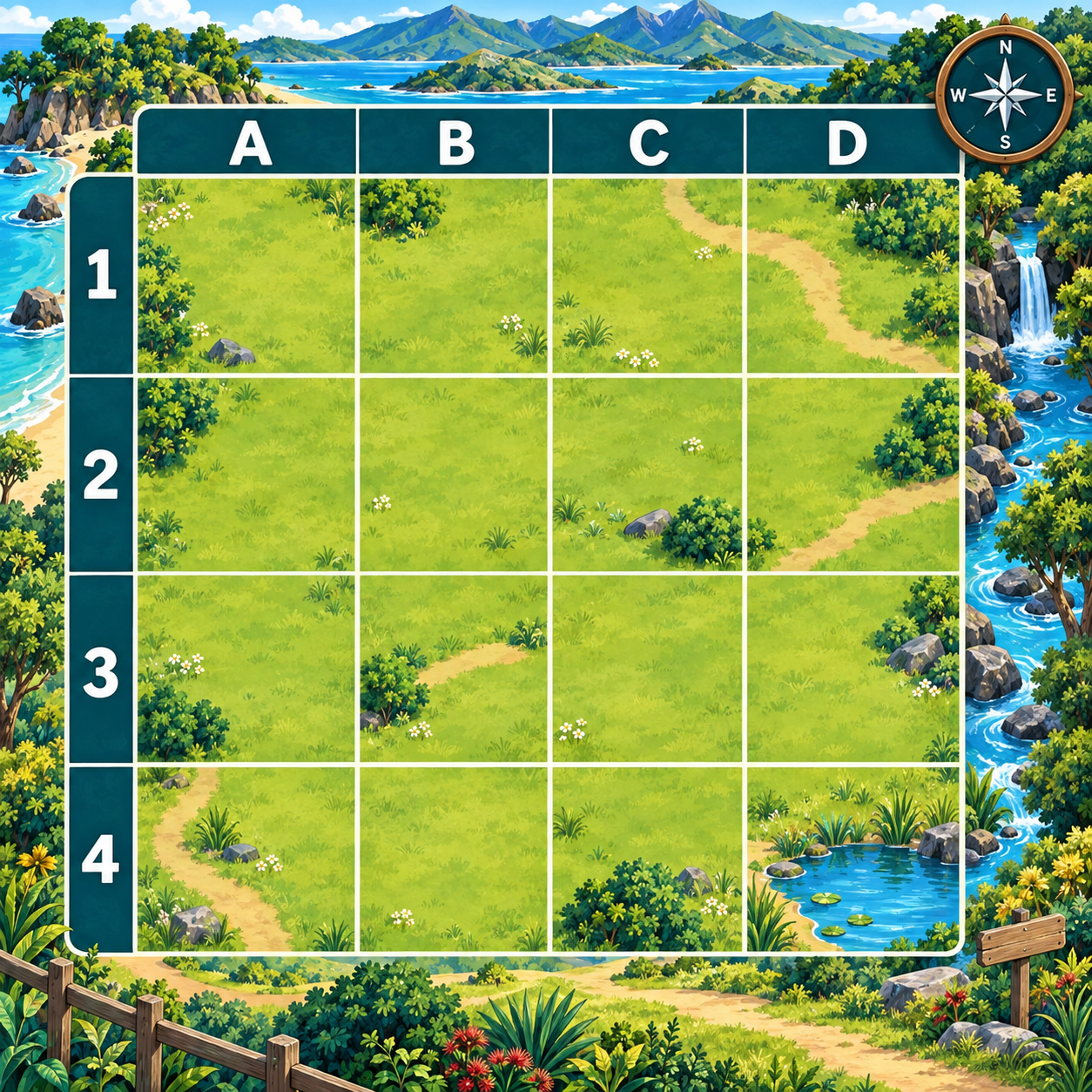
Read the Museum, Marae and FINISH positions on Koru’s 4×4 map. Plot a Library at A2 and a School at D4, then write 1–2 sentences describing Koru’s checkpoints using A4, B3 and D1.
Need help? See the steps
A grid reference identifies one square on a map. Read the letter first, then the number: C3 means column C, row 3.
- STEP 1Read the whole challenge once.
- STEP 2Find the numbers, facts or rules you need.
- STEP 3Choose a useful strategy.
- STEP 4Show your solution clearly enough that someone else could follow it.
CREATE · What do I need to solve?
Read the Museum, Marae and FINISH positions on Koru’s 4×4 map. Plot a Library at A2 and a School at D4, then write 1–2 sentences describing Koru’s checkpoints using A4, B3 and D1.
Choose a way to show your thinking. There can be more than one good strategy.
Ways to think away from the screen
PEN & PAPER — show your working there if it helps.
SAY IT OUT LOUD — explain what you need to find.
TALK IT THROUGH — if someone is available, you can discuss your strategy.
ARCADE
06 · ArcadePlay the challenge and follow the instructions inside the game. Complete at least one challenge successfully to finish this Game Break.
ICONIC ARCADE · TERM 1 · WEEK 6
Card Battle
Single-player · touch friendly · progress saves on this deviceChoose the stronger card. Compare the values before you play.
How did Week 6 feel?
07 · ClubhouseThis part is about your own learning. There are no right or wrong feelings.
WHAT AM I LEARNING?
Reflect on independence, challenge level and the next useful practice step.
Choose an honest self-assessment.
Need help? See the steps
Choose what feels true for you, then write one thing you understand better now.
- STEP 1Choose how the week felt.
- STEP 2Write one thing you understand better now.
How did this week feel?
There are no right or wrong answers. Choose what feels true for you.
MAP MISSION · KORU THE ROBOT
START → MARAE → FINISH
Guide Koru the robot across the illustrated map one square at a time. Record where Koru travels, then tell the whole journey.
KORU'S LOCAL HISTORY MAP
START TO MARAE
Move Koru the robot from to the marae.

MARAE TO FINISH
Now continue Koru's journey from the marae at to FINISH.
TELL KORU'S WHOLE JOURNEY
Write 2–3 sentences explaining Koru's journey from START, to the marae, and then to FINISH. Include coordinates and some of the directions you used.
Example: Koru started at and travelled to the marae at . Then Koru travelled from the marae to FINISH at . Koru moved north, east…
LOCAL HISTORY TRAIL · HIDDEN MOA
I see 9 moa, and you?
Look carefully through the historical timber trail. Tap each moa when you spot it. Some are hiding among the trees, logs, hut, cart and bridge.
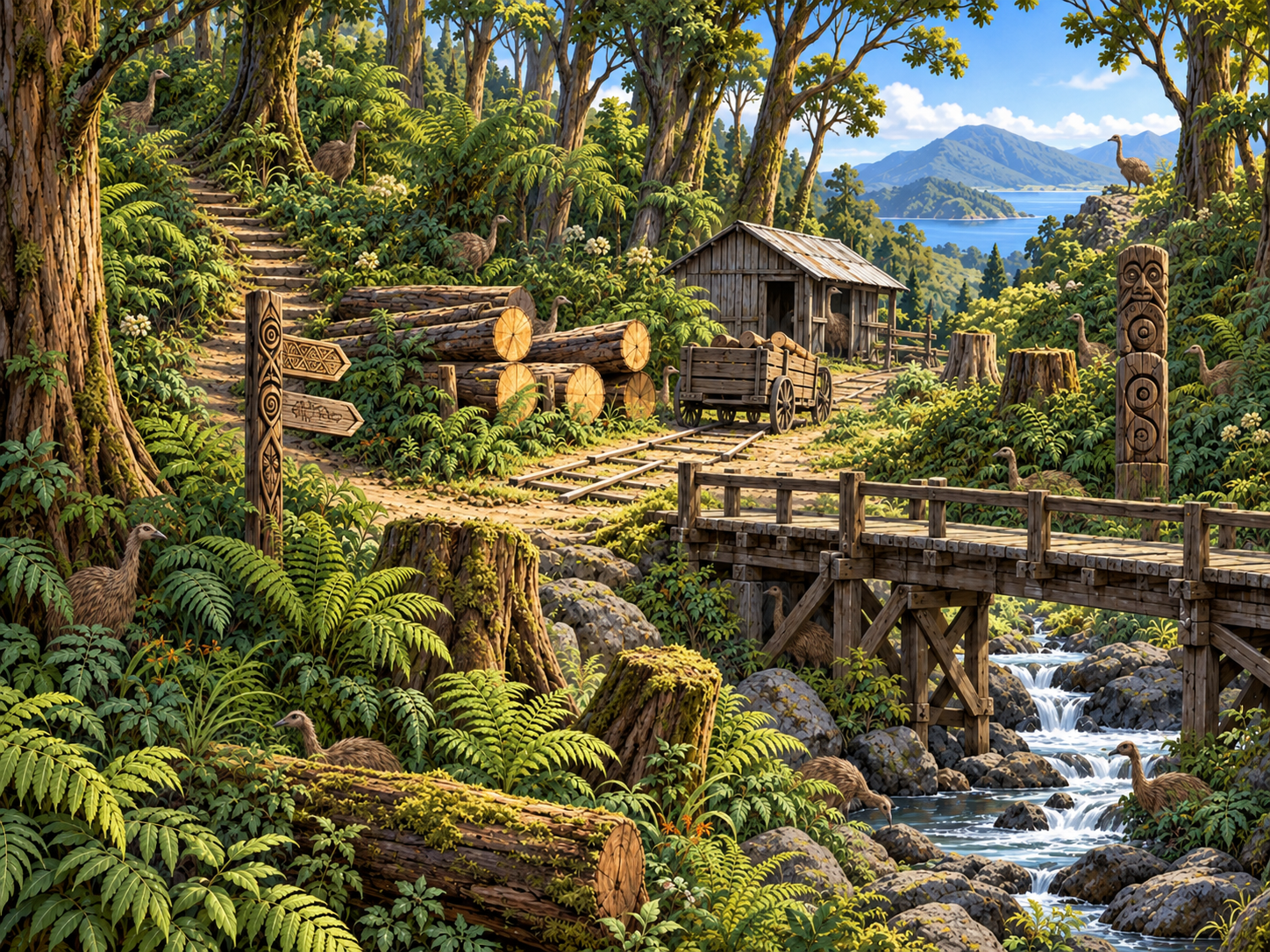
Look closely — some moa blend into the timber trail.