“I think the wrapped ice will melt more slowly.” This is a…
TERM 3 · WEEK 7
Science Lab: Curious Minds
Learn the words. Investigate evidence. Explore energy. Graph results. Run a fair test. Then build one giant science chain reaction.
0 / 7 missions complete
ENGLISH · SCIENCE
Science Vocabulary Machine
01 · Word LabScientists need precise words so other people can understand exactly what was noticed, tested and learned.
WHAT AM I LEARNING?
Build science word families from base words and endings, then use observation, prediction, test, result and conclusion accurately.
Need help? See the steps
TEACH · LEARN THE IDEA
A prediction says what you think may happen before a test. An observation says what you actually notice or measure. A result is what happened. A conclusion explains what the evidence suggests. Word endings can turn actions such as observe and predict into nouns such as observation and prediction.
- STEP 1Build OBSERVATION from observe + -ation.
- STEP 2Build PREDICTION from predict + -ion.
- STEP 3Read each science sentence slowly.
- STEP 4Ask: is this before the test, or something actually noticed?
- STEP 5Use the feedback, then try again if needed.
WE DO ONE TOGETHER
“I think the wrapped ice will melt more slowly” is a prediction because the test has not happened yet. “I can see a puddle under the ice” is an observation because it describes something we can notice.
NOW YOU TRY · YOUR MISSION
Build observe → observation and predict → prediction from word parts. Then choose whether short science statements are predictions or observations. Notice that conclude → conclusion belongs to the same science word-family pattern, while test and result are core investigation words too.
WORD LAB · ENGLISH
0 / 4 Power the Science Vocabulary Machine
TEACH · Scientists build words too
A base word carries the main meaning. An ending can change the kind of word we need.
observe → observation predict → prediction conclude → conclusion
Test and result are useful science words too. We will use all five words through the week.
Build two science words. Tap a base, then the ending that completes it.
Word 1 waiting…Word 2 waiting…
USE THE WORDS · Choose the best fit
“I can see water collecting under the ice cube.” This is an…
ENGLISH · SCIENCE
The Mystery Cup
02 · Evidence BenchGood scientists separate what they can observe from what they only think might be true. The Mystery Cup is about collecting evidence before deciding.
WHAT AM I LEARNING?
Read for evidence, collect observations from a simple investigation and distinguish what the evidence shows from a claim that goes too far.
Need help? See the steps
TEACH · LEARN THE IDEA
An observation is something you can notice or measure. An explanation is an idea about why it happened. Evidence can support an explanation, but one clue does not always prove exactly what is inside the cup.
- STEP 1Read the whole case file first.
- STEP 2Find the two clues already described in the text.
- STEP 3Use the on-screen cup and magnet tests to collect more observations.
- STEP 4Record what happened before deciding what it means.
- STEP 5Choose the conclusion that says only what the evidence supports.
WE DO ONE TOGETHER
“I hear a click when the cup moves” is an observation. “There must be paper clips inside” is an explanation. The click is evidence, but by itself it does not prove what made the sound.
NOW YOU TRY · YOUR MISSION
Read the Mystery Cup case file and find two clues in the text. Then use the large SHAKE CUP and BRING MAGNET CLOSE controls to collect two new observations. Finish by choosing the statement directly supported by the evidence.
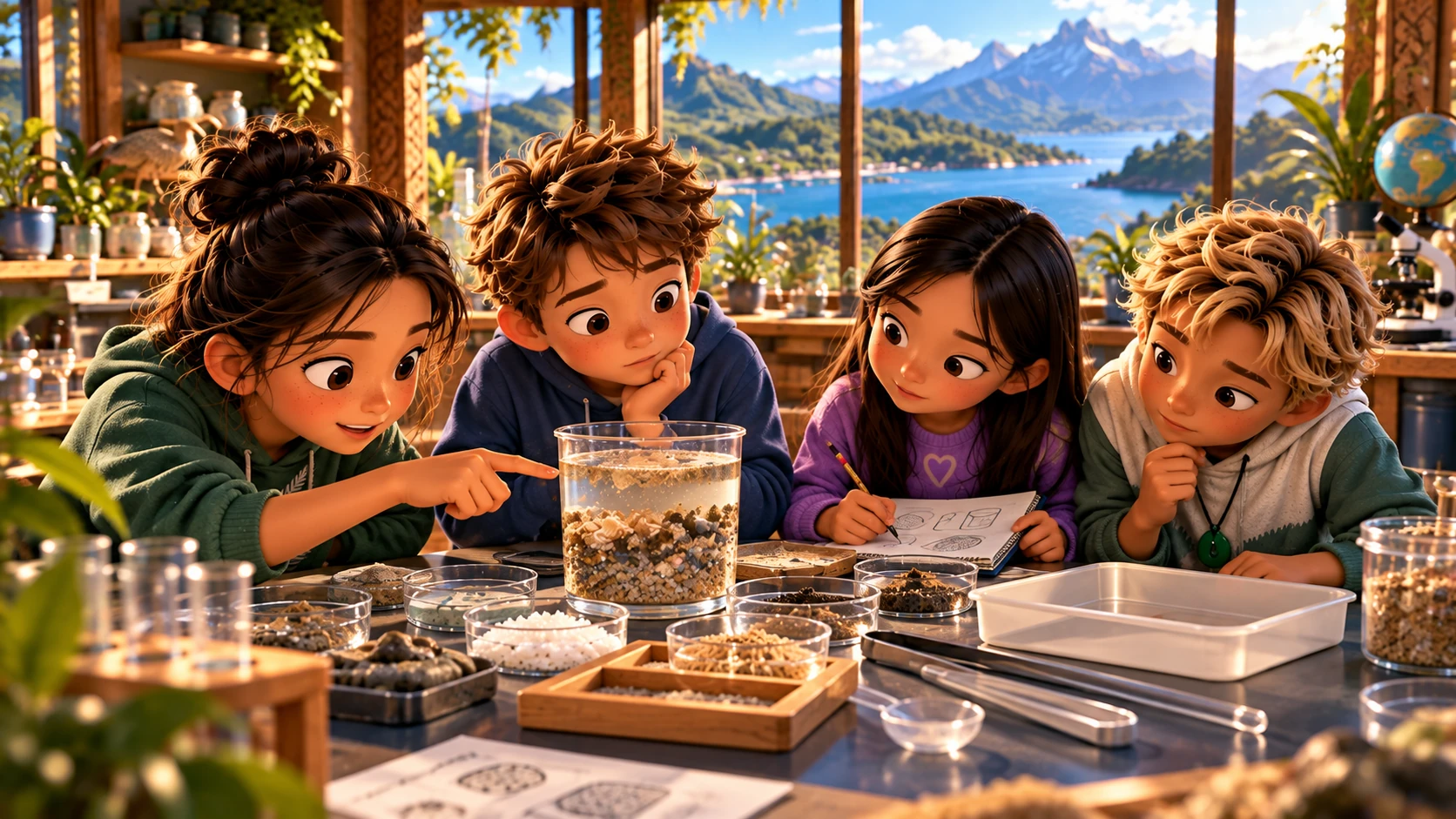
READING · ENGLISH
0 / 5 The Mystery Cup
READ · The sealed cup
At the science fair, a sealed cup was left on the investigation bench. Nobody could see inside it. Maia picked it up carefully and heard a light click-click. When she tipped the cup, the pieces slid quickly across the bottom.
On the table were four possible labels: sand, salt, paper clips and small stones. Ari reminded the team that a label is only a possibility until evidence supports it.
“We should record what we notice first,” said Maia. “Then we can choose a safe test that might tell us something new.”
The page controls the experiment. No shaking, sound or device motion is required.
EVIDENCE NOTEBOOK ○ Text clue 1 ○ Text clue 2 ○ Cup test ○ Magnet test
WHAT DOES THE EVIDENCE SUPPORT?
Choose the statement that stays closest to what the investigation actually showed.
ENGLISH · SCIENCE
Power the Machine
03 · Energy LabEnergy helps things happen. In this mission you will watch a machine work, notice where its energy comes from and explain what the energy changes into.
WHAT AM I LEARNING?
Explain a simple energy transformation by predicting what energy goes into a device, observing what happens when it works, and writing an evidence-linked explanation.
Need help? See the steps
TEACH · LEARN THE IDEA
Energy can move from place to place or change form. Electrical energy travels through a powered device. Light energy helps us see. Sound energy is carried by vibrations. Movement energy is the energy of something moving; scientists also call it kinetic energy. Batteries and food store chemical energy that can be released.
- STEP 1Learn the five energy types shown on the page.
- STEP 2If YouTube works on your device, watch the short Grade 4 video and look for energy moving or changing. The video is optional.
- STEP 3Run the fan example with the page. Watch what changes.
- STEP 4Choose one machine for your own investigation.
- STEP 5Write and lock a prediction before pressing ACTIVATE.
- STEP 6Observe the real result, then write what you noticed and what energy changed into.
WE DO ONE TOGETHER
A fan uses electrical energy. When it is switched on, the blades spin and we can hear it. The electrical energy changes mainly into movement energy and some sound energy.
NOW YOU TRY · YOUR MISSION
Learn the difference between stored, electrical, light, sound and movement energy. Watch the optional Grade 4 energy video if it is available. Work through a fan example together, then choose a torch, bicycle or solar calculator. Write a prediction before you activate it, observe what the device actually does, and finish a short Energy Investigation Report without changing your original prediction.
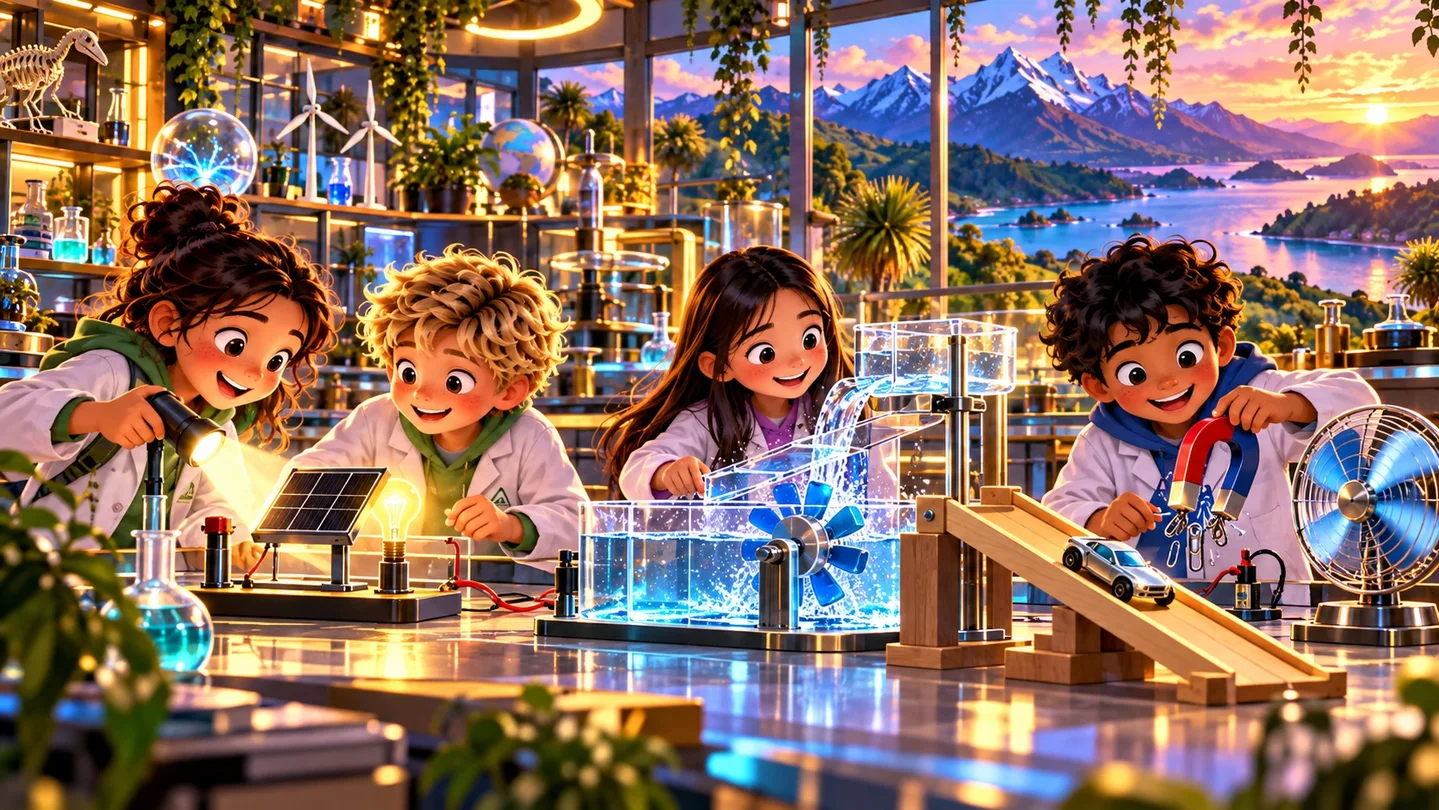
WRITING + SCIENCE · ENERGY
1 / 4 Power the Machine
Batteries and food can store chemical energy ready to be released.
Electrical energy can travel through wires and powered devices.
Light energy travels from a light source and helps us see.
Sound energy travels as vibrations that we can hear.
Moving objects have movement energy. Scientists also call this kinetic energy.
WATCH · ENERGY IN ACTION OPTIONAL VIDEO
While you watch, look for energy moving or changing into light, sound, heat, electricity or movement. If YouTube is blocked on your device, skip this video — everything you need is taught on this page.
WE DO ONE TOGETHER
What happens when we switch on a fan?
The fan starts with electrical energy. Press the button and watch what changes.
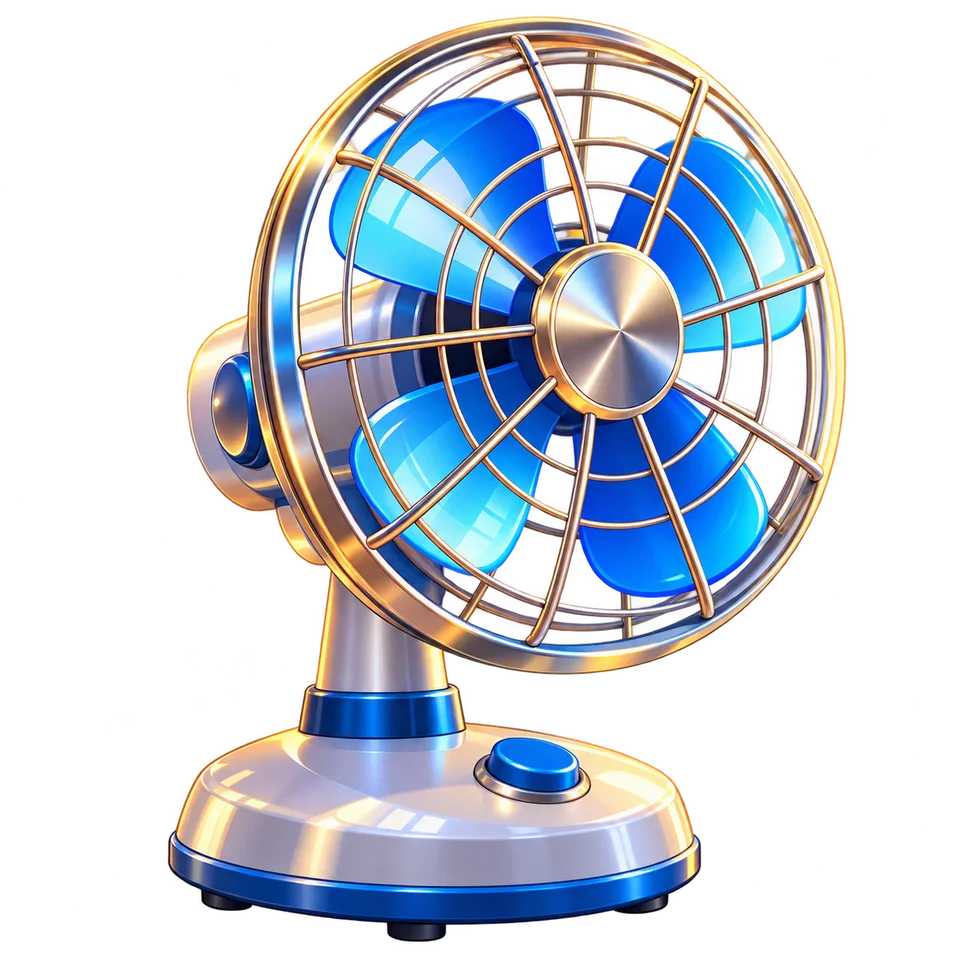
Electrical energy → movement + sound. We know movement happened because the blades spun and the paper moved. The hum is evidence of sound energy.
Choose one machine to investigate.
You will make your prediction before the machine is activated.
STEP 1 · MAKE A PREDICTION
A prediction is what you think will happen before the test. It does not have to be correct.
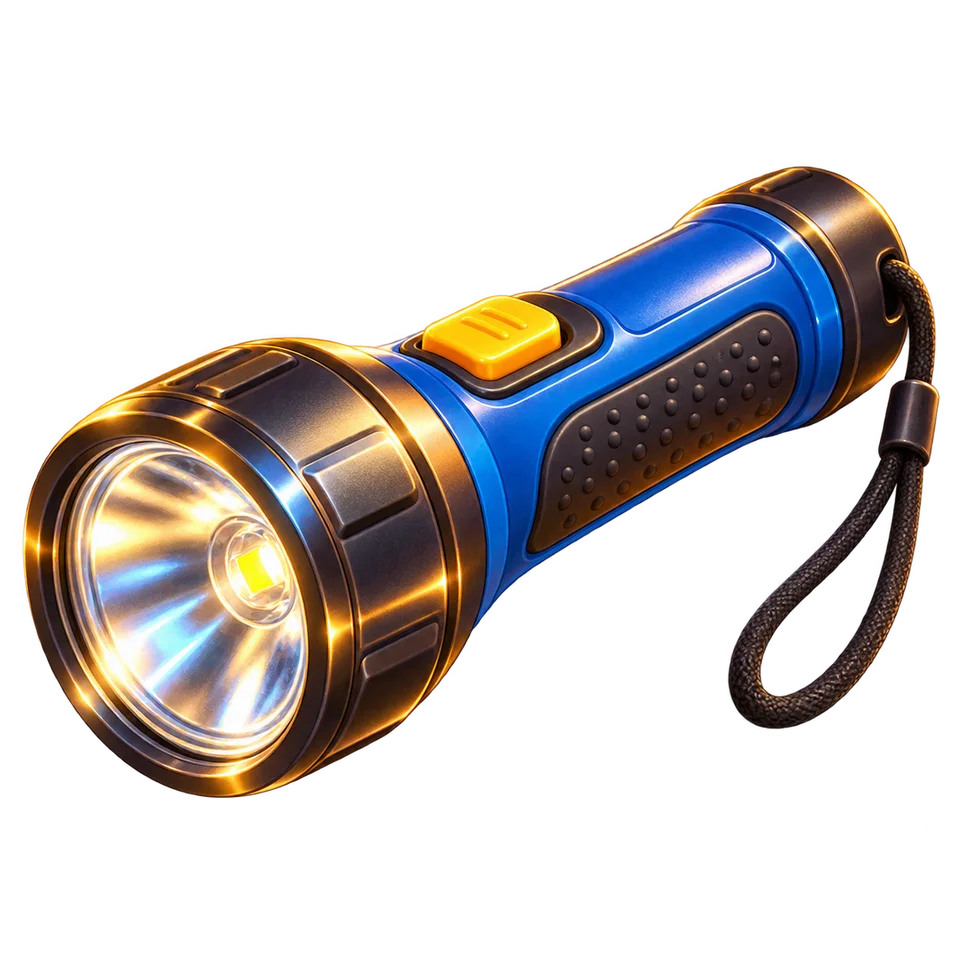
STEP 2 · TEST IT. Press ACTIVATE, then watch carefully. Your prediction stays locked.
RESULT · WHAT ACTUALLY HAPPENED?
→
ENERGY INVESTIGATION REPORT
MATHS · SCIENCE
Graph the Lab Results
04 · Graph LabScientists use graphs to make measurements easier to compare. You will read the table first, then build a graph that matches it exactly.
WHAT AM I LEARNING?
Read a data table, order measured times, calculate a difference and construct a labelled zero-based bar graph before choosing a supported conclusion.
Need help? See the steps
TEACH · LEARN THE IDEA
A bar graph uses bar height to show a value. The scale must start at zero and increase evenly. Shortest means the smallest value. Longest means the largest value. Difference tells how far apart two values are, so subtract the smaller value from the larger one.
- STEP 1Read all four times in the table before touching the graph.
- STEP 2Order the tests from shortest time to longest time.
- STEP 3Subtract the shortest time from the longest time to find the difference.
- STEP 4Build each bar from zero until it matches the table.
- STEP 5Read the finished graph and choose only the conclusion the data proves.
WE DO ONE TOGETHER
If one test took 4 minutes and another took 7 minutes, the second bar must be taller. The difference is 7 − 4 = 3 minutes.
NOW YOU TRY · YOUR MISSION
Ice-cube melting times are A 8 min, B 12 min, C 6 min, D 15 min. 1) Order the times least to greatest. 2) Find the difference between the fastest and slowest. 3) Build a bar graph. 4) Choose the conclusion supported by the data.
MATHS LAB · DATA
0 / 4 Graph the Lab Results
TEACH · Read the table before drawing the graph
Another scientist measured how long four ice tests took to melt completely. A bar graph must start at zero, use an even scale, and match every value in the table.
| Test | A | B | C | D |
|---|---|---|---|---|
| Minutes | 8 | 12 | 6 | 15 |
3 · Build the graphTap + or − until every bar matches the table.
MINUTES
SCIENCE
The Great Ice Rescue
05 · Ice Test BenchA fair test helps us compare things properly. In The Great Ice Rescue, only the wrapping should change.
WHAT AM I LEARNING?
Design and run a fair comparison by changing one variable, keeping key conditions equal, recording a halfway observation and using measured results for a cautious conclusion.
Need help? See the steps
TEACH · LEARN THE IDEA
A variable is something that can change in a test. For a fair comparison, change one variable and keep the other important conditions the same. Here we change the wrapping, while the ice-cube size, place and test time stay the same.
- STEP 1Choose wrapping material as the one thing that changes.
- STEP 2Keep ice-cube size, location and test time the same.
- STEP 3Start the virtual test and watch all four cubes.
- STEP 4At five minutes, write only what you can actually see.
- STEP 5Continue to ten minutes and compare the measured ice remaining.
- STEP 6Choose the conclusion the measurements support and explain why the comparison was fair.
WE DO ONE TOGETHER
Imagine two equal ice cubes. Put paper around one and leave the other unwrapped. Keep both in the same place for 10 minutes. Wrapping is the one thing that changed, so the comparison is fairer.
NOW YOU TRY · YOUR MISSION
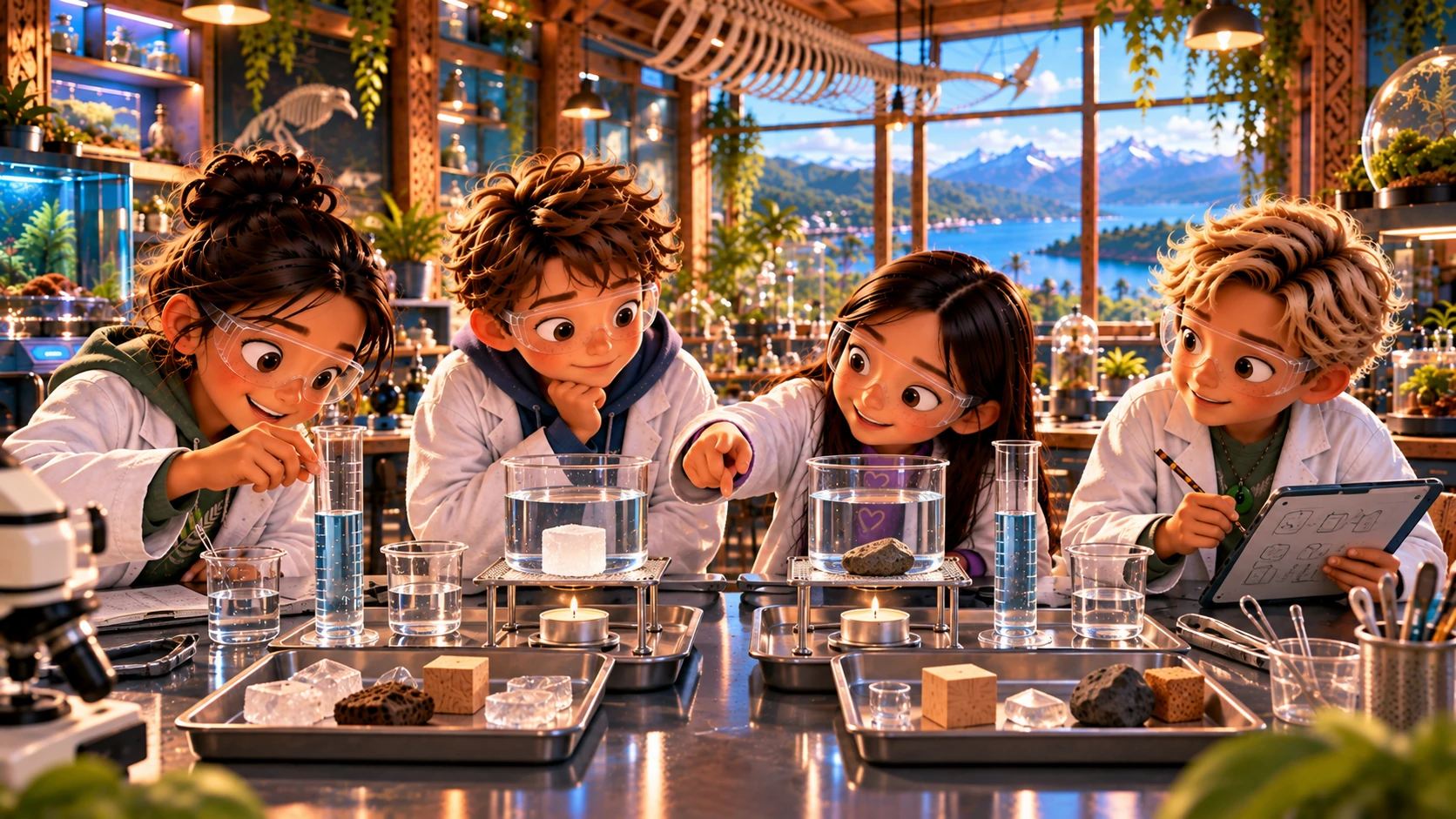
Test paper, fabric, bubble wrap and no wrapping side by side. Choose wrapping as the one thing that changes and keep ice-cube size, location and test time equal. Advance the virtual test to five minutes, record what you can see, then advance to ten minutes and compare the measured ice remaining.
APPLIED MISSION · SCIENCE
SET UP The Great Ice Rescue
QUESTION · Which wrapping keeps an ice cube from melting the longest?
A fair comparison changes one thing and keeps the other important conditions the same. Here, the wrapping changes. The ice-cube size, location and test time stay equal.
PAPER
20 g start
FABRIC
20 g start
BUBBLE WRAP
20 g start
NO WRAP
20 g start
0 / 10 min
HALFWAY OBSERVATION
Record something you can actually see before continuing.
RESULTS · Ice remaining after 10 minutes
Paper 9 g · Fabric 12 g · Bubble wrap 15 g · No wrap 5 g
SCIENCE
The Great Science Chain Reaction
06 · Chain Reaction LabCHAIN REACTION BRIEFING
Test four parts of one giant machine. First learn how to test the ramp, then investigate magnetism, moving air and a measured water level. Watch what actually happens, change your setup when a test misses the target, and finally press START THE CHAIN REACTION to run the whole machine.
THE GREAT SCIENCE CHAIN REACTION
Build one giant cause-and-effect machine. At each zone: change something → test it → watch what happens → try again if you need to. Nothing here depends on fast reactions or perfect dragging.
1RAMP 2MAGNET 3AIR 4WATER
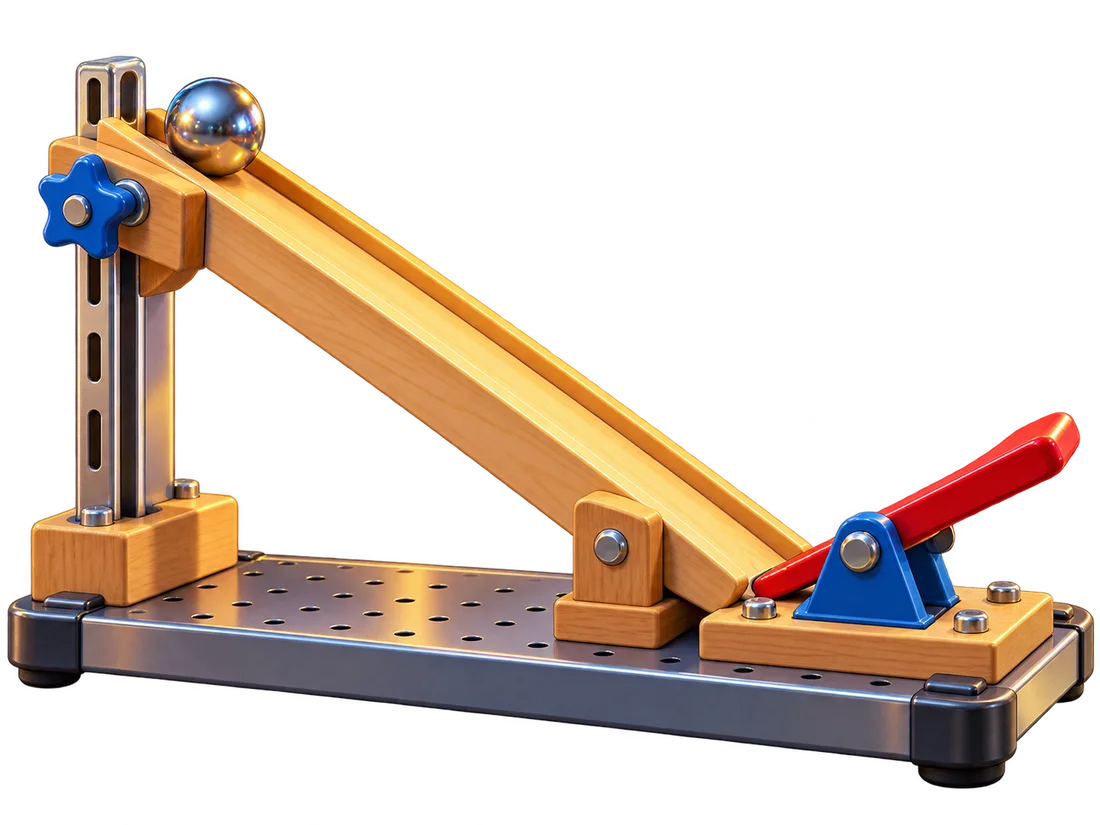
Ramp → Ball → Lever
What are we testing?
A higher ramp can change how fast the ball moves. We need the ball to reach the lever — not stop short and not fly past it.
TARGET
STEP 1: Choose a ramp height. STEP 2: Press TEST RAMP. STEP 3: Watch where the ball goes.
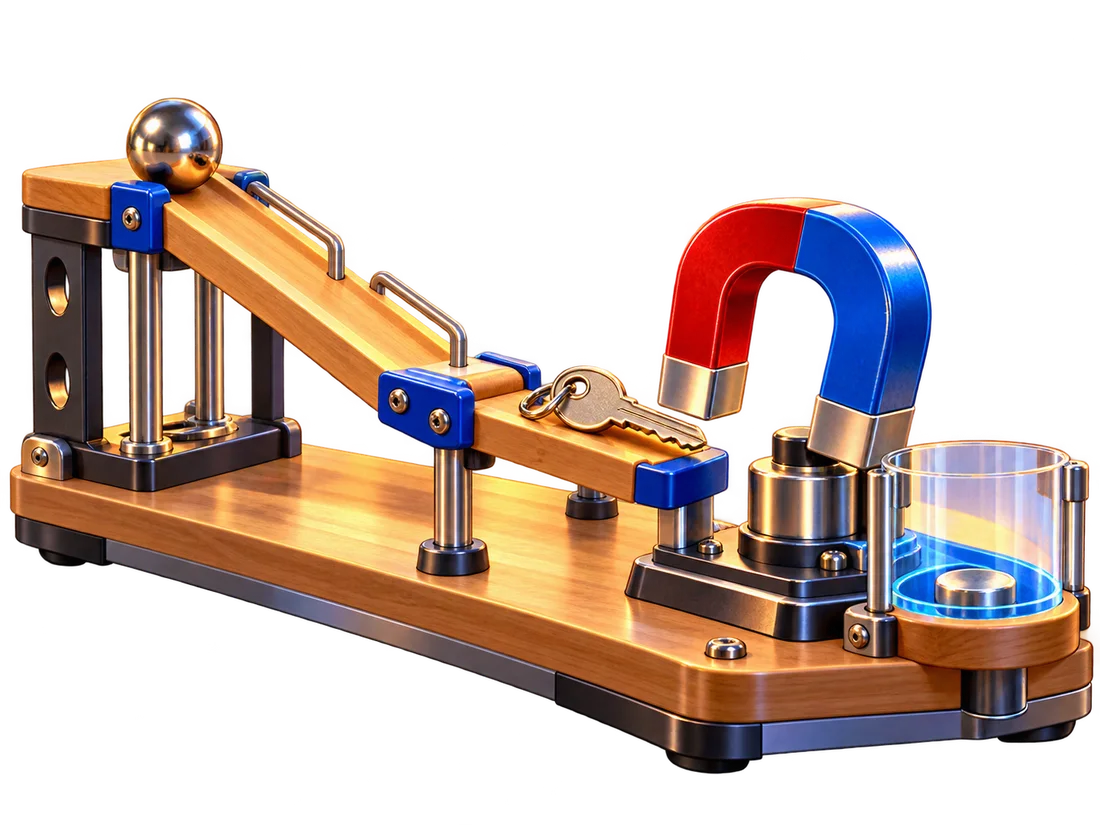
Magnet → Metal → Switch
Remember:
Magnets attract some metals. Test an object and watch it. If it does not move, use that result to choose your next test.
Fan → Moving Object → Trigger
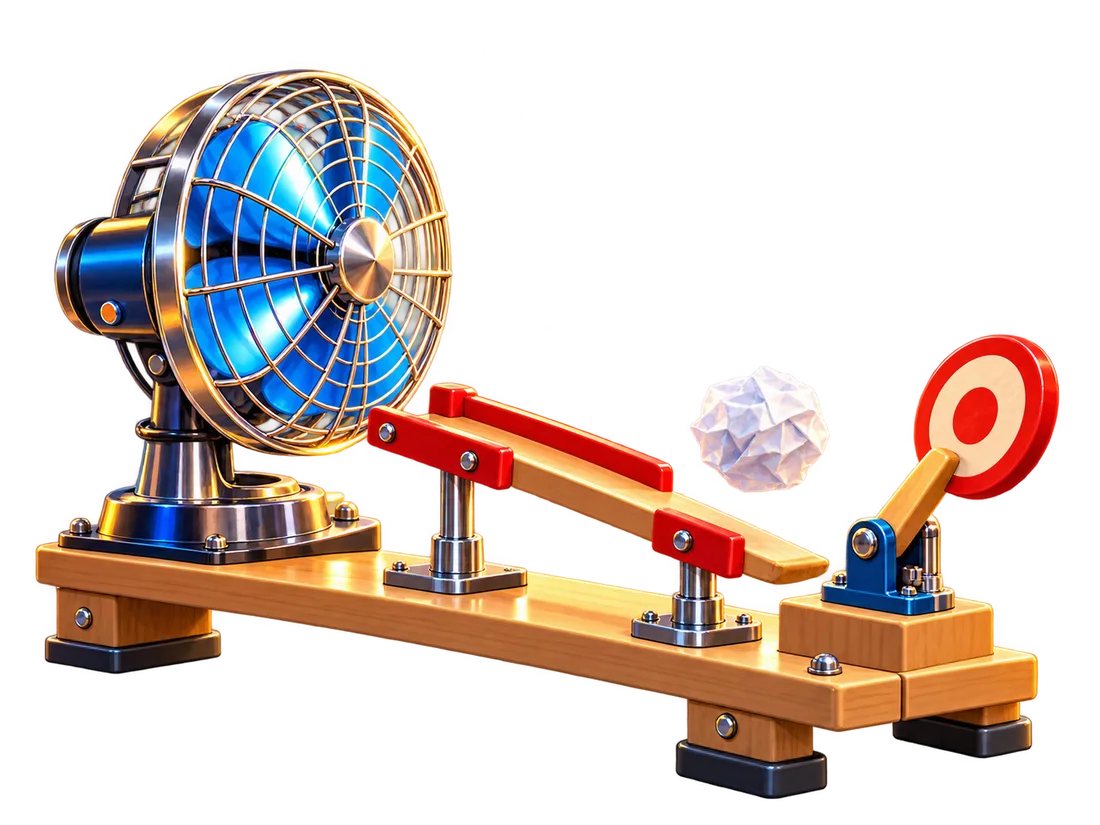
Watch the result:
The fan transfers energy to objects in the moving air. We need an object that travels across the bench and touches the trigger.
Water Level → Float → Final Switch
Your target is 300 mL.
Each press adds exactly 100 mL. Watch the level and count in hundreds until the float reaches the switch.
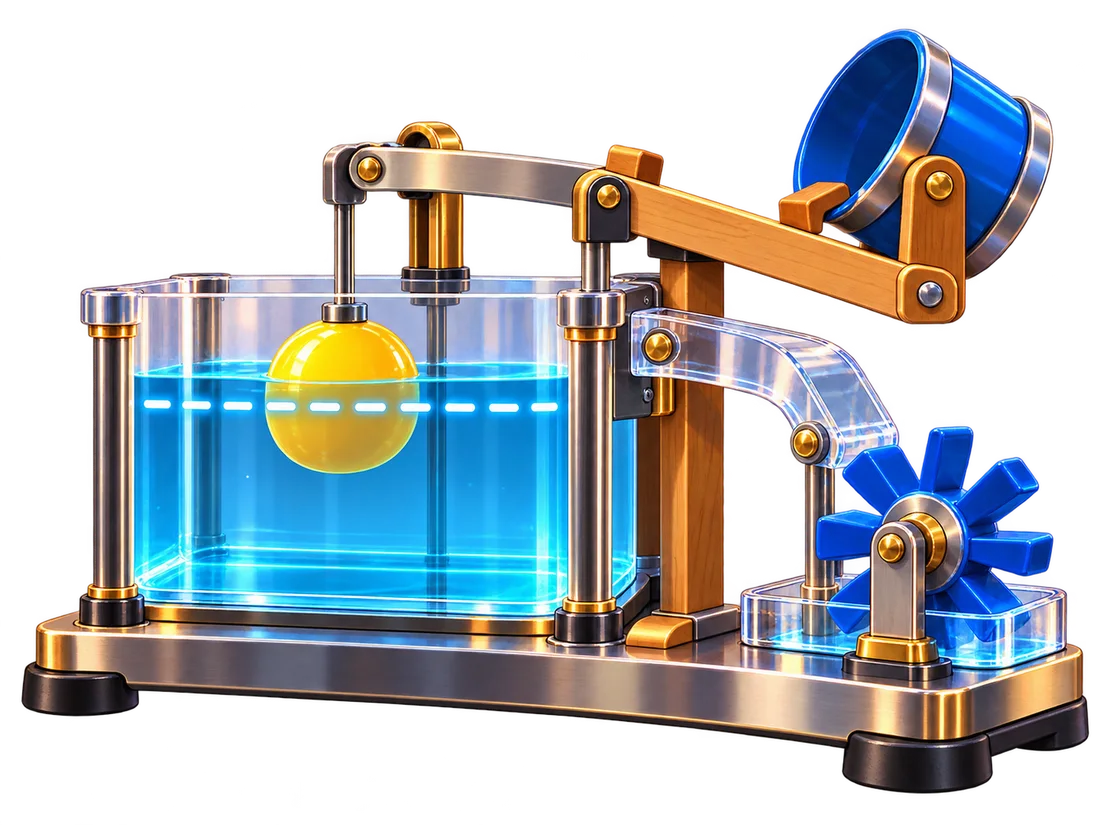
0 mLTarget: 300 mL
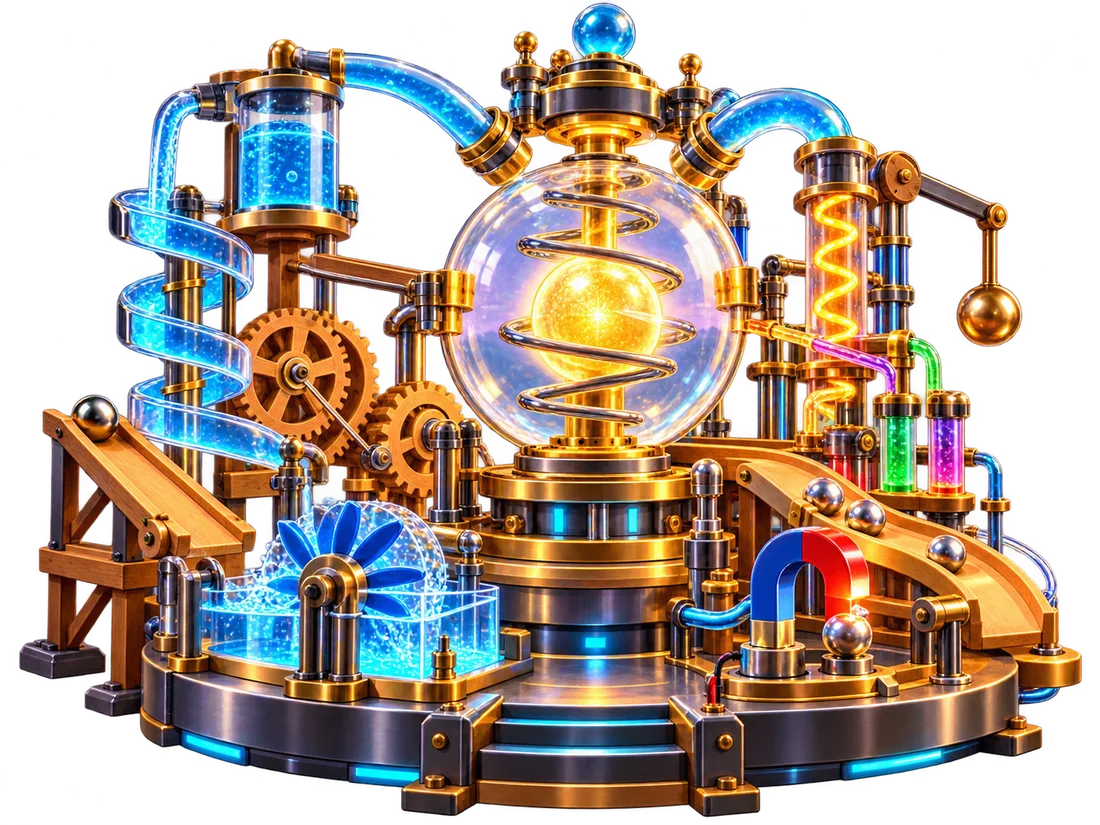
Run the whole machine!
Your tests prepared every part. Press the button and watch each action trigger the next one.
BALL→MAGNET→AIR→WATER→POWER!

THE WHOLE LAB IS ALIVE!
You tested each part, used the results to improve the setup, then connected four science ideas into one working chain reaction.
Week 7 Check In
07 · ClubhouseThis part is about your own learning. There are no right or wrong feelings.
WHAT AM I LEARNING?
Reflect on independence, challenge level and one thing the learner understands better after the week.
Need help? See the steps
TEACH · LEARN THE IDEA
Choose what feels true for you, then write one thing you understand better now.
- STEP 1Choose how the week felt.
- STEP 2Write one thing you understand better now.
NOW YOU TRY · YOUR MISSION
Choose: Mostly by myself / Some help / Another go. Then finish: 'One thing I understand better now is…' Home Science Lab remains a separate optional bonus and is not required to finish the week.
How did this week feel?
There are no right or wrong answers. Choose what feels true for you.