TERM 4 · WEEK 4
Wild Aotearoa: Ranger Rescue
Wildlife, Habitats & Biodiversity
ENGLISH · SCIENCE
Ranger Classification Lab
01 · Field StationLet’s investigate the words for Wild Aotearoa: Ranger Rescue. Look for what changes, then explain what you notice.
WHAT AM I LEARNING?
Decode and use scientific classification vocabulary, including meaningful prefixes and multi-syllable words.
Sort and explain: vertebrate, invertebrate, habitat, species, predator, native. What does in- tell you in invertebrate?
Need help? See the steps
A prefix is a word part added to the beginning of a word. It changes the word’s meaning.
- STEP 1Read or tap each word.
- STEP 2Look closely at the word part the mission is teaching.
- STEP 3Sort, build or compare the words.
- STEP 4Explain the pattern in your own words.
PRACTISE · Try the words
ENGLISH · SCIENCE
Ranger Field Report
02 · Bush TrackRead the Wild Aotearoa: Ranger Rescue information first. Talk the idea through, then answer one small question at a time.
WHAT AM I LEARNING?
Find the main idea, classify organisms from observable information and use details as evidence.
Which animal is a vertebrate? Which is an invertebrate? Which observation suggests the wetland edge is being used by more than one species?
Need help? See the steps
The main idea is the most important thing the writer wants you to understand. Evidence is a clue from the text, picture or data that supports your thinking. An inference is an idea you work out from clues.
- STEP 1Read once to understand what it is mostly about.
- STEP 2Read the question again and find the part that helps.
- STEP 3Say your answer aloud using because, then check it against the text.
- STEP 4Record a useful clue from the source.
- STEP 5Explain what that clue tells you.
TEACH · Read this first
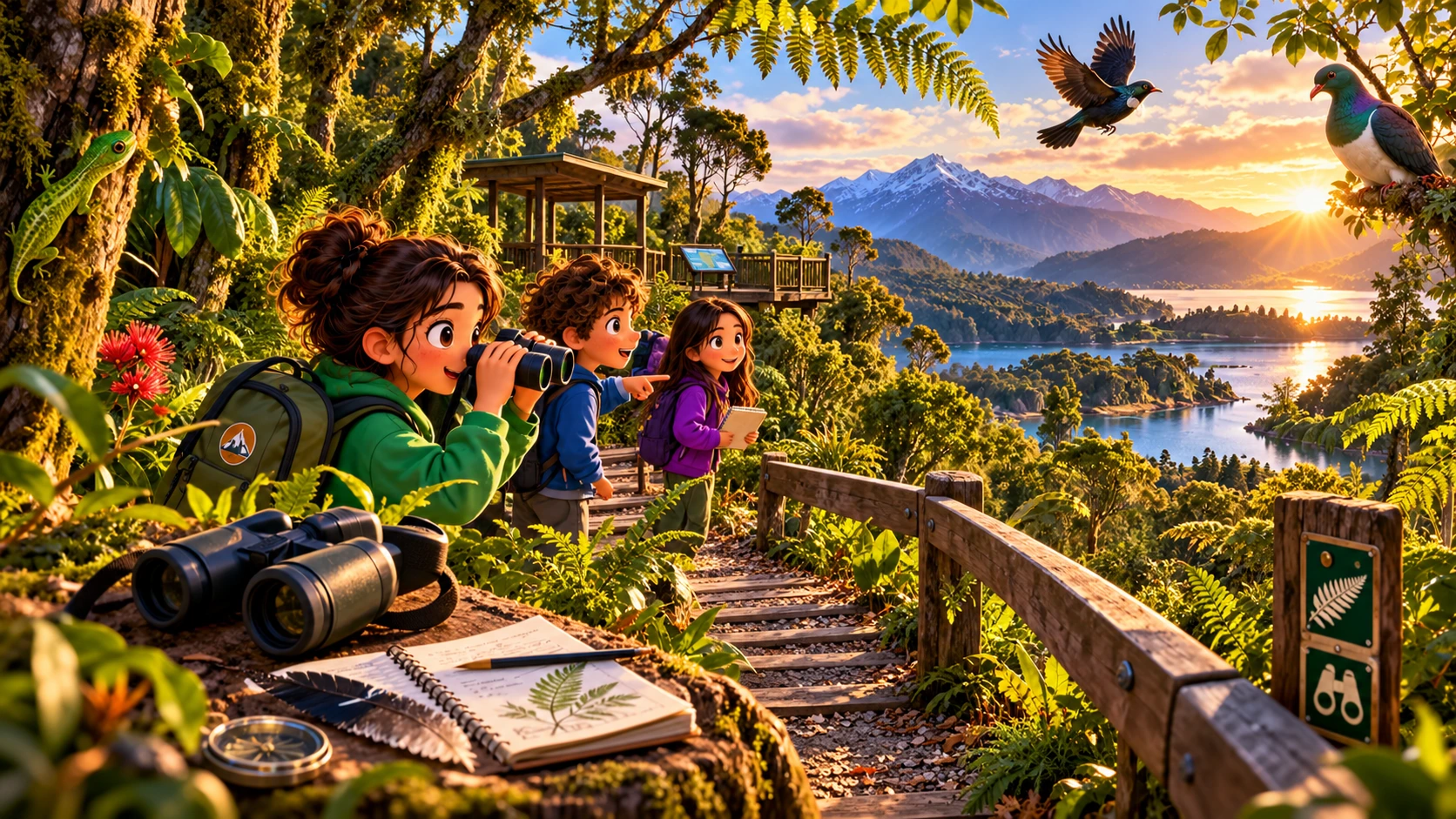
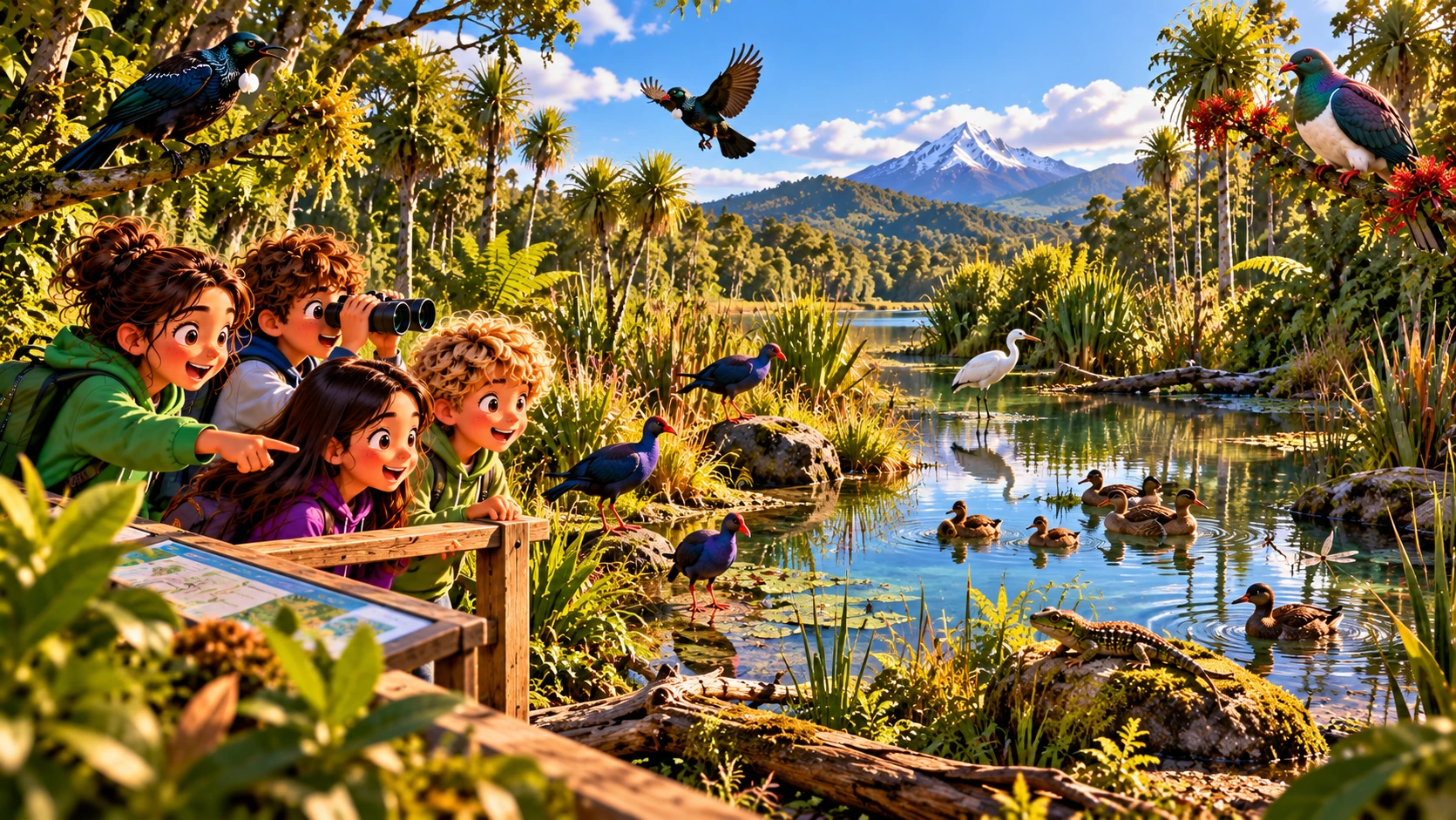
WILD AOTEAROA FIELD REPORT — Camera 1 recorded a tūī feeding near flowering harakeke. Camera 2 recorded a wētā beneath damp leaf litter. Camera 3 recorded a native gecko sheltering under a warm rock. At the wetland edge, footprints from two different bird species appeared beside insect tracks. Rangers will keep monitoring before deciding whether the habitat needs changes.
CHECK THE TEXT · Find a clue
A clue from the text is called evidence.

ENGLISH · SCIENCE
Write the Ranger Report
03 · Ranger BaseYOUR WRITING JOB: Write 2 paragraphs about one Wild Aotearoa habitat. Describe at least three observations, classify at least two organisms and finish with one careful ranger recommendation.
WHAT AM I LEARNING?
Write a concise information report using observations as evidence and avoiding unsupported claims.
Write 2 paragraphs about one Wild Aotearoa habitat. Describe at least three observations, classify at least two organisms and finish with one careful ranger recommendation.
Need help? See the steps
Evidence is a clue from the text, picture or data that supports your thinking. An inference is an idea you work out from clues. First get your ideas ready. Then build the writing one part at a time.
- STEP 1Introduce what you are writing about.
- STEP 2Give your first important idea.
- STEP 3Add another useful detail, reason or example.
- STEP 4Finish so the reader understands your message.
NEED TO GET YOUR IDEAS READY?
Choose any way that helps. These are optional — you can always do the whole mission on screen.
PRACTISE · Plan it one step at a time
SELF-CHECK · Check your work
This checklist helps you check your work. You do not have to tick every box to submit — the mission check looks at the work you created.
MATHS
Wildlife Count Lab
04 · Wetland SurveyWork through one maths question at a time. Your answers will be checked before the next mission unlocks.
WHAT AM I LEARNING?
Interpret frequencies in a small wildlife data set and compare categories accurately.
Camera-trap sightings: tūī 8, gecko 5, wētā 11, pekapeka 3. 1) Most sightings? 2) Difference between tūī and gecko? 3) Total sightings? 4) How many more wētā than pekapeka?
Need help? See the steps
Start with the steps below. They show you what to look for and what to do.
- STEP 1Read the question and decide what you need to find.
- STEP 2Notice the important numbers and units.
- STEP 3Choose a strategy and work it out.
- STEP 4Type the answer, then check that it makes sense.
PRACTISE & SOLVE · One question at a time
Read → choose a strategy → work it out → check your answer. Correct answers stay correct if another question needs another go.
SCIENCE
Ranger Rescue: Restore the Habitat
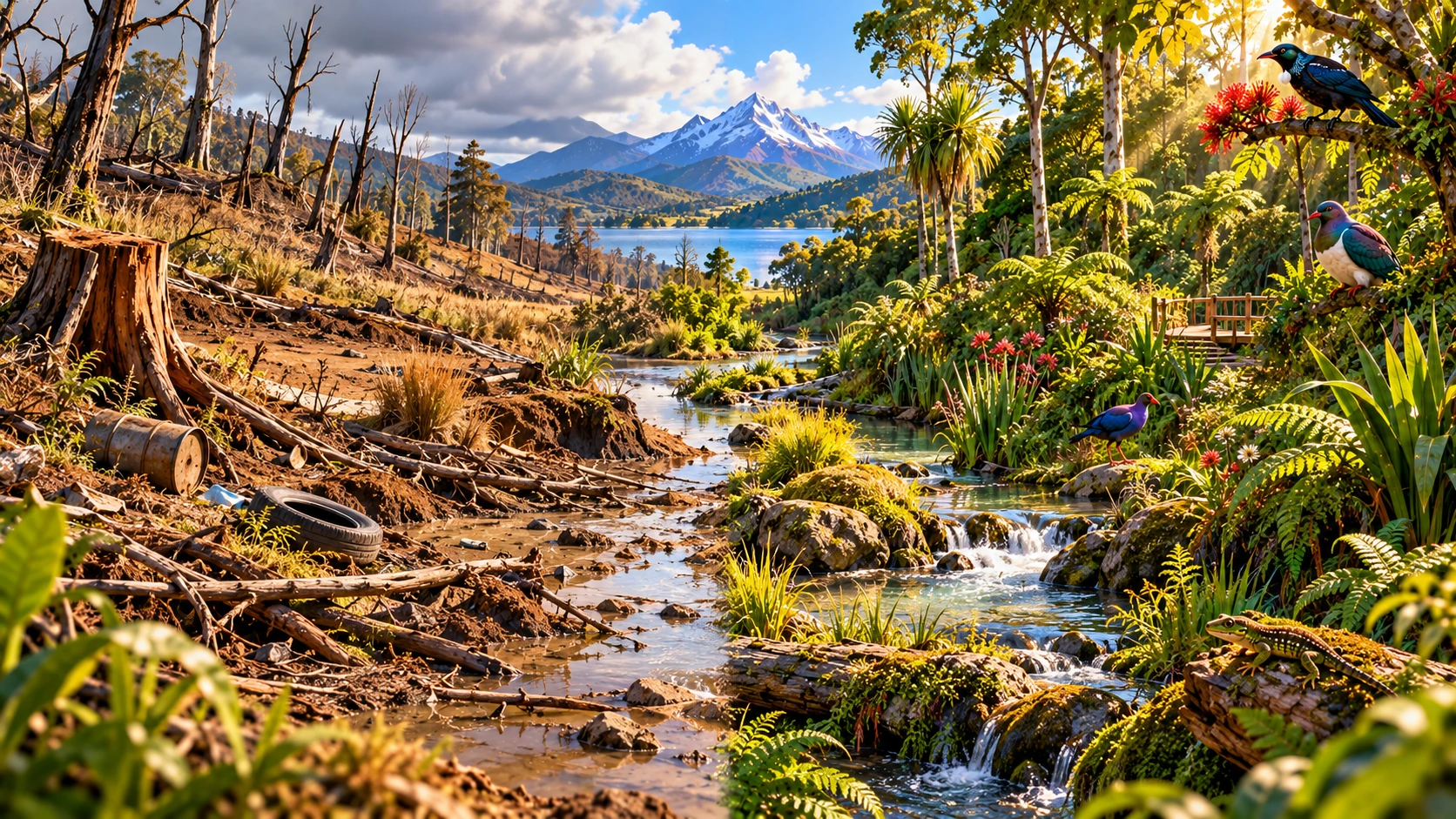
05 · Habitat ZoneThis is your real-world Wild Aotearoa: Ranger Rescue challenge. Work out what the problem asks you to find or make.
WHAT AM I LEARNING?
Use classification, habitat needs and data to make one evidence-based conservation decision.
A reserve has fewer insect sightings near one track after ground cover was removed. Choose one action: add native ground cover, add brighter night lights, or remove more leaf litter. Explain your choice using the field evidence and name one thing rangers should keep measuring.
Need help? See the steps
Evidence is a clue from the text, picture or data that supports your thinking. An inference is an idea you work out from clues.
- STEP 1Read the whole challenge once.
- STEP 2Find the numbers, facts or rules you need.
- STEP 3Choose a useful strategy.
- STEP 4Show your solution clearly enough that someone else could follow it.
CREATE · What do I need to solve?
A reserve has fewer insect sightings near one track after ground cover was removed. Choose one action: add native ground cover, add brighter night lights, or remove more leaf litter. Explain your choice using the field evidence and name one thing rangers should keep measuring.
Choose a way to show your thinking. There can be more than one good strategy.
Ways to think away from the screen
PEN & PAPER — show your working there if it helps.
SAY IT OUT LOUD — explain what you need to find.
TALK IT THROUGH — if someone is available, you can discuss your strategy.
SCIENCE
Biosecurity Patrol
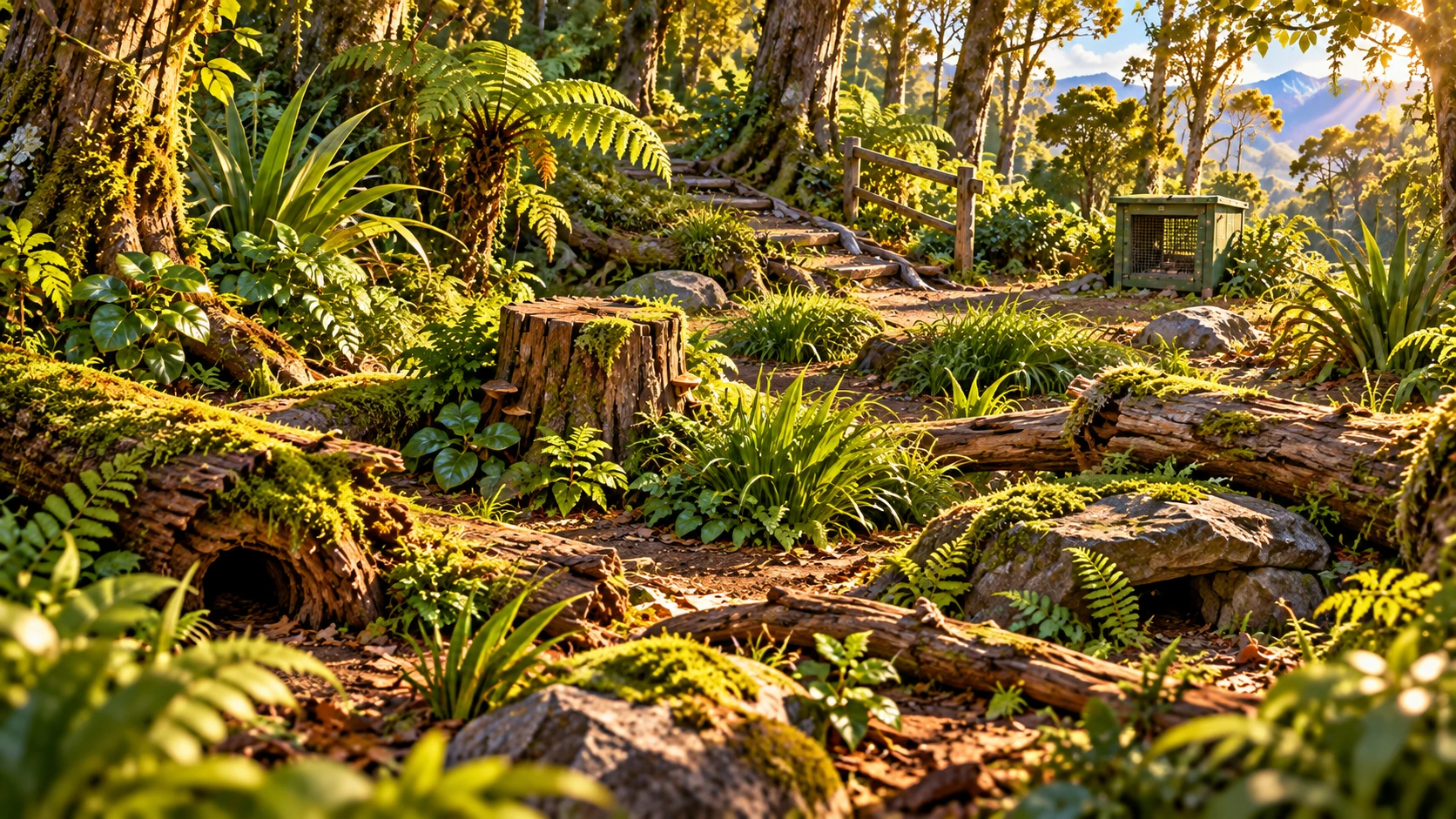
06 · Biosecurity ZonePatrol the reserve for invasive pests. Tap possums, stoats, rabbits and feral cats, but protect native tūī, kererū, geckos and wētā. Reach the ranger target before time runs out.
Protect the native bush
Tap pests. Leave native wildlife alone. Take your time, spot the pests, and build your score before the patrol timer runs out.
Week 4 Check In
07 · ClubhouseThis part is about your own learning. There are no right or wrong feelings.
WHAT AM I LEARNING?
Reflect on classification, habitats, evidence and conservation decisions.
Choose: Mostly by myself / Some help / Another go. Finish: 'One wildlife idea I can explain now is…'
Need help? See the steps
Choose what feels true for you, then write one thing you understand better now.
- STEP 1Choose how the week felt.
- STEP 2Write one thing you understand better now.
How did this week feel?
There are no right or wrong answers. Choose what feels true for you.