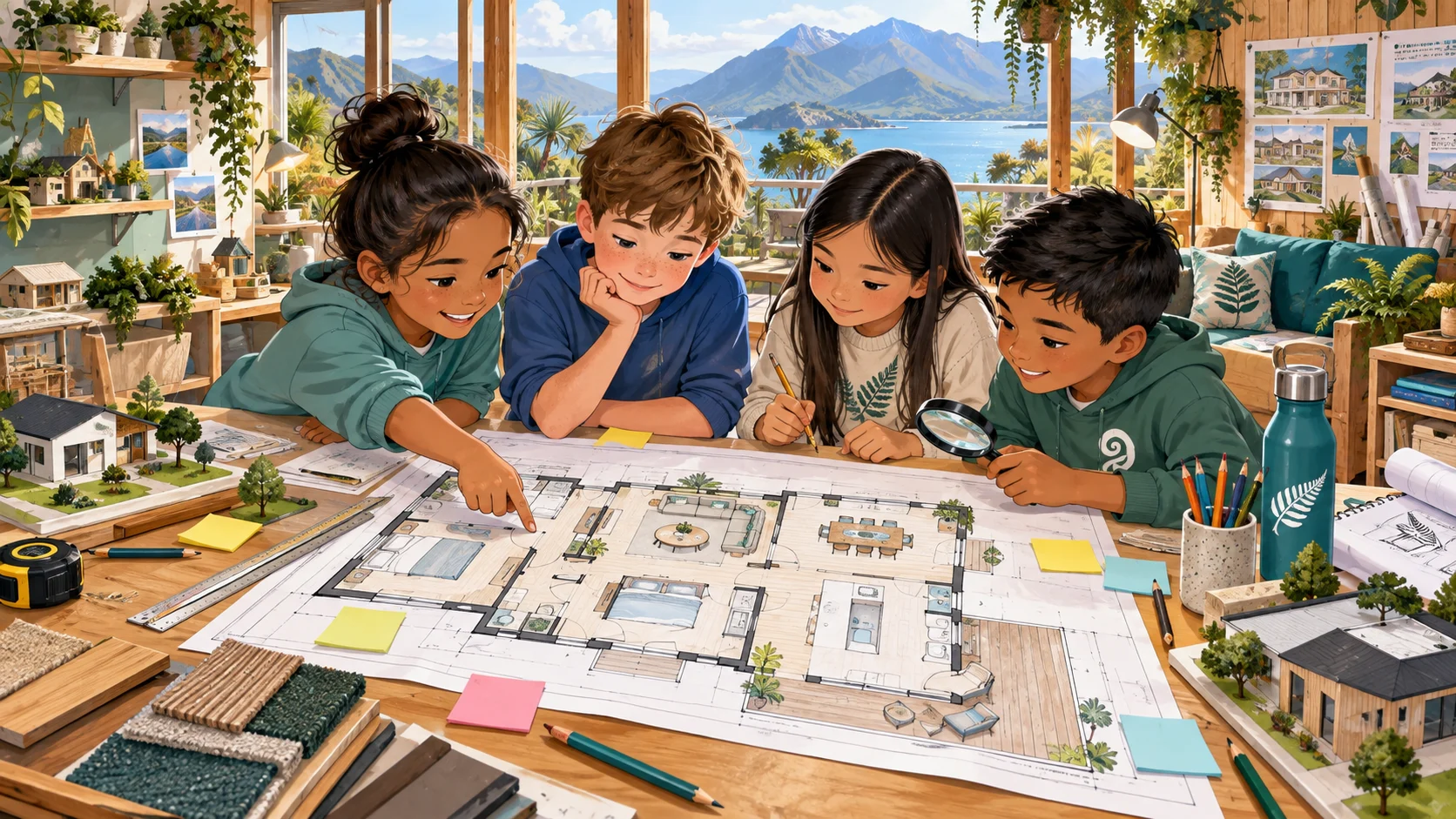
Introduce who is at the dream home and help us picture where the story begins.
TERM 2 · WEEK 6
Build Your Dream Home
Seven missions. One dream home.
Design it. Plan it. Solve it. This week you’re the builder! Complete 7 fun missions to create your own amazing dream home.
LET’S BUILD! →0 / 7 missions complete
ENGLISH
Sentence Builder: How, When & Where
01 · Builder WorkshopLet’s investigate the words for Build Your Dream Home. Look for what changes, then explain what you notice.
WHAT AM I LEARNING?
I can build complex sentences that show clear relationships between ideas.
YOUR MISSION
Which sentence best shows a reason?
TEACH · LEARN THE IDEA
A complex sentence links a main idea with a dependent idea. Conjunctions such as although, because, while, unless and therefore help readers see cause, contrast, time and condition.
- STEP 1Read or tap each word.
- STEP 2Look closely at the word part the mission is teaching.
- STEP 3Sort, build or compare the words.
- STEP 4Explain the pattern in your own words.
BUILDER TEAM Everyone can design, plan and build.
UNJUMBLE THE INSTRUCTION
Make the sentence stronger
The builder mixed up the instruction. Tap the blocks in the correct order to rebuild the sentence, then write an instruction of your own using a detail that tells how, when or where.
BUILDER CHALLENGE Unjumble the word blocks.
0 / 10 blocks Your sentence will build here…
HOW carefully · with strong rope WHEN after lunch · before the rain WHERE beside the pool · near the garden
YEAR 5 DEEP DIVE · REQUIRED Complete this deeper Year 5 mahi as part of the mission — not as an optional extra.
Do the main mission first, then complete this section. It is deliberately more independent than Year 4 and is part of your weekly homework workload.
CHECK THE CORE IDEA
Which sentence best shows a reason?
ENGLISH
My Dream Home Story
02 · Story StudioYOUR WRITING JOB: Explain how two design features make the home work better for its users. Use measurements or plan evidence.
WHAT AM I LEARNING?
I can write a precise technical description or set of rules.
YOUR MISSION
Explain how two design features make the home work better for its users. Use measurements or plan evidence.
TEACH · LEARN THE IDEA
Technical writing prioritises clarity, consistency and exact terms. Define parts, explain functions and remove wording that could be interpreted in more than one way.
- STEP 1Introduce what you are writing about.
- STEP 2Give your first important idea.
- STEP 3Add another useful detail, reason or example.
- STEP 4Finish so the reader understands your message.

IMAGINE · WRITE · DRAW
My Dream Home Story
Imagine you are inside your dream home. Who is there? What happens? Write a short story, then draw the home underneath if you want to.
Add something interesting, surprising, funny or exciting.
Show what happens at the end so the story feels complete.
OPTIONAL
Draw your dream home
You do not have to draw to finish the mission. This space is here if drawing helps you imagine your story.
Draw here with your finger, stylus or mouse.
YEAR 5 DEEP DIVE · REQUIRED Complete this deeper Year 5 mahi as part of the mission — not as an optional extra.
Do the main mission first, then complete this section. It is deliberately more independent than Year 4 and is part of your weekly homework workload.
YOU TRY
Explain how two design features make the home work better for its users. Use measurements or plan evidence.
Minimum guide: 100 words. Quality matters: make the reasoning, evidence or design decision clear. □ answers the exact task□ uses specific detail□ ideas are connected□ reread and improved
ENGLISH
Read the Blueprint
03 · Blueprint DeskRead the Build Your Dream Home information first. Talk the idea through, then answer one small question at a time.
WHAT AM I LEARNING?
I can identify how a text is organised and use its structure to find meaning.
YOUR MISSION
What does the scale note help the reader do?
TEACH · LEARN THE IDEA
Headings, paragraphs, diagrams, captions, sequence words and cause-and-effect structures help readers predict where information will appear.
- STEP 1Read once to understand what it is mostly about.
- STEP 2Read the question again and find the part that helps.
- STEP 3Say your answer aloud using because, then check it against the text.
- STEP 4Record a useful clue from the source.
- STEP 5Explain what that clue tells you.
READ · FIND · PROVE IT
Read the Blueprint
Learn how a plan works, then use labels and location words to prove where each space sits.
TEACH · HOW TO READ A BLUEPRINT
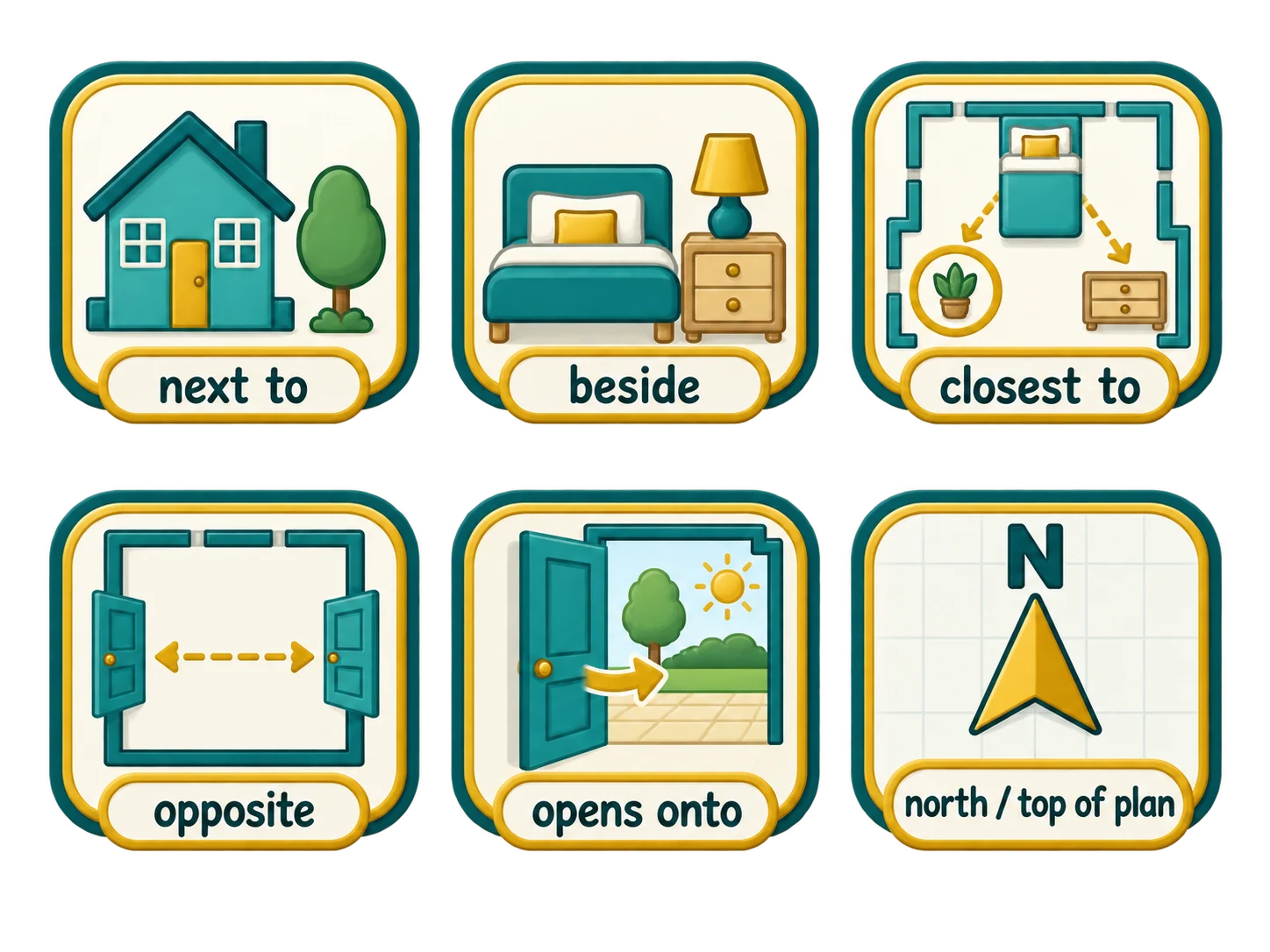
A blueprint or floor plan is a bird’s-eye view — as if you are looking down from above. Room labels tell you what each space is. A north arrow gives direction. Location words such as next to, beside, closest to, opposite and opens onto explain how spaces connect.
- Find the label. Identify the room or outdoor space.
- Notice its position. Look at what touches it or sits nearby.
- Prove your answer. Use a label or location detail from the plan or notes.
N ↑
Bedroom
 Bedroom
Bathroom
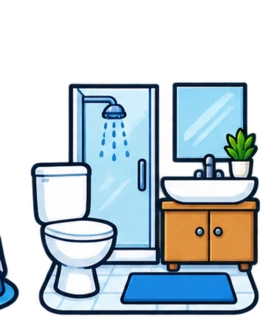 Bathroom
Kitchen
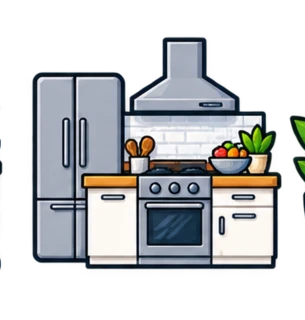 Kitchen
Living room
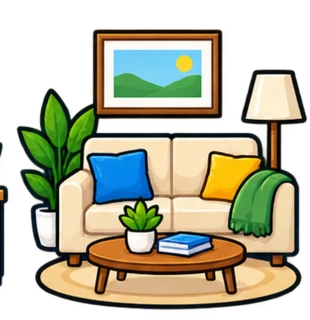 Living room
Deck
 Deck
Garage
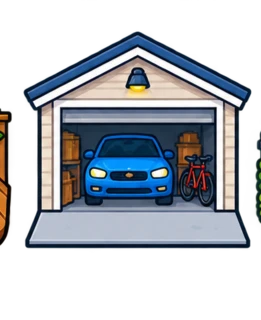 Garage
Garden
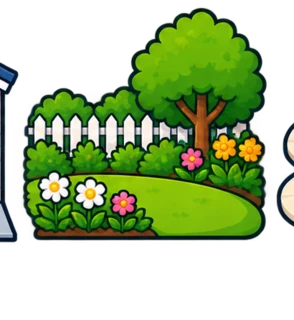 Garden
Pool
 Pool
BLUEPRINT NOTES
The plan shows a 9 m by 7 m living area, a 4 m by 3 m studio and doors marked with swing arcs. Windows are shown with breaks in the wall line. A scale note states that 1 cm on the plan represents 1 m in the room.
YEAR 5 DEEP DIVE · REQUIRED Complete this deeper Year 5 mahi as part of the mission — not as an optional extra.
Do the main mission first, then complete this section. It is deliberately more independent than Year 4 and is part of your weekly homework workload.
The plan shows a 9 m by 7 m living area, a 4 m by 3 m studio and doors marked with swing arcs. Windows are shown with breaks in the wall line. A scale note states that 1 cm on the plan represents 1 m in the room.
Fluency check: read the source aloud once at a natural pace, pausing where the punctuation tells you to.CHECK THE CORE IDEA
What does the scale note help the reader do?
MATHS
Floor Plan Maths
04 · Floor Plan LabWork through one maths question at a time. Your answers will be checked before the next mission unlocks.
WHAT AM I LEARNING?
I can solve area and perimeter problems and use measurements in design.
YOUR MISSION
1) Area of 9 m × 7 m 2) Perimeter of 4 m × 3 m
TEACH · LEARN THE IDEA
Perimeter measures distance around a shape; area measures surface covered. Keep the units different: cm for perimeter, cm² for area.
- STEP 1Read the question and decide what you need to find.
- STEP 2Notice the important numbers and units.
- STEP 3Choose a strategy and work it out.
- STEP 4Type the answer, then check that it makes sense.
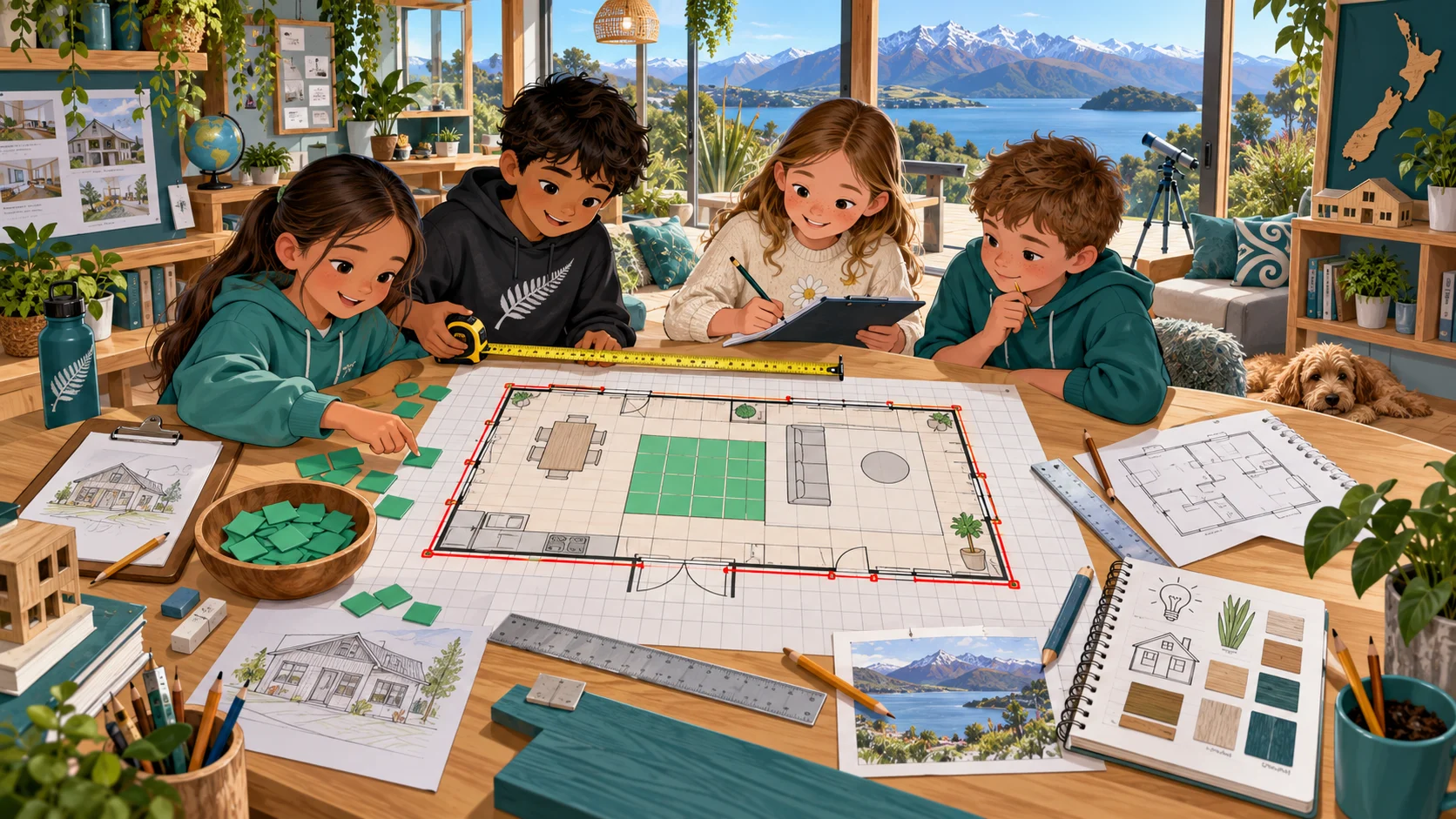
MEASURE · BUILD · DISCOVER
Floor Plan Maths
See the idea first, then build it yourself. Change the room and watch area and perimeter respond in different ways.
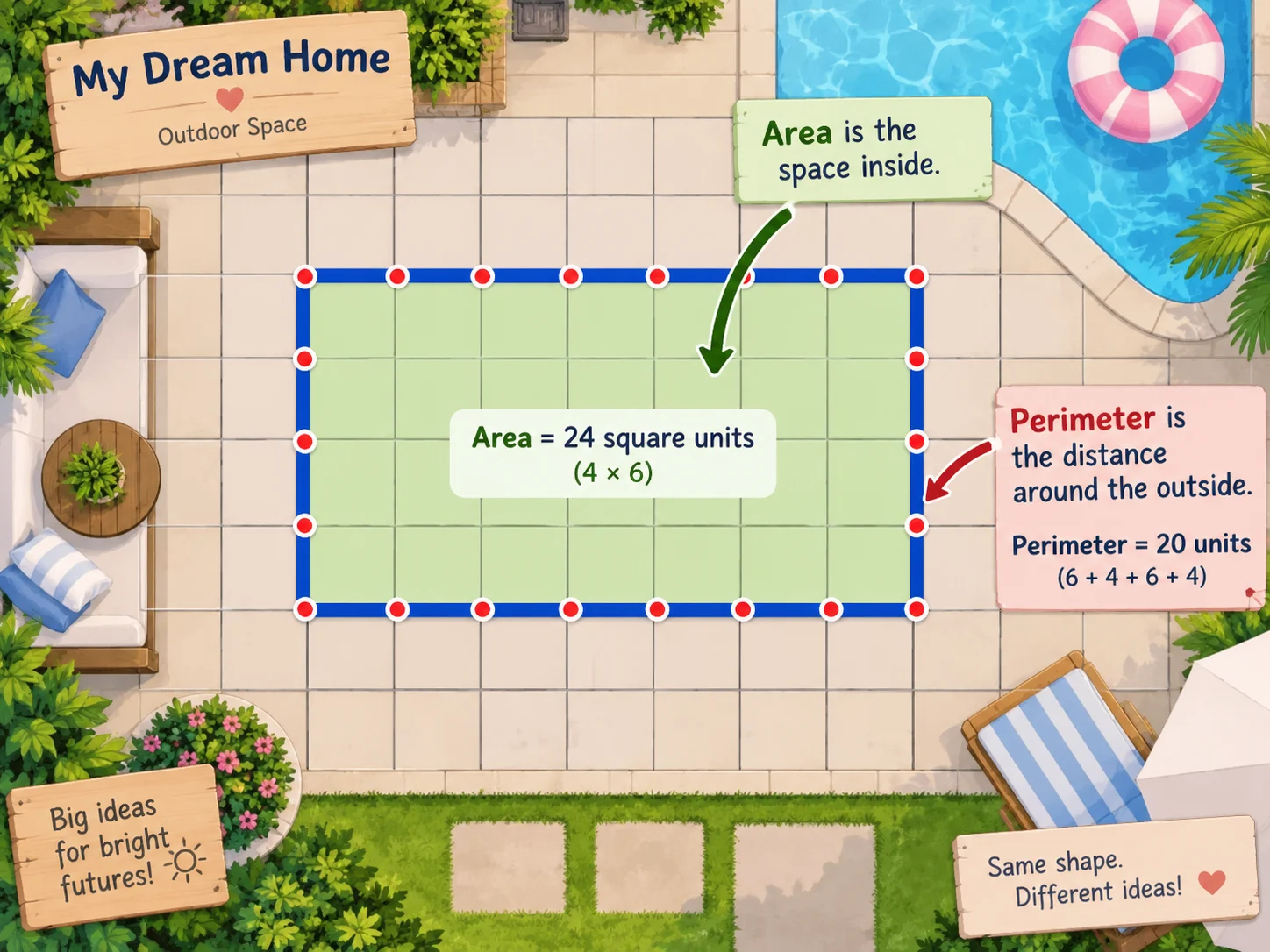
LOOK
Inside and outside measure different things.
Area measures the square metres inside the room. Perimeter measures the metres around the outside edge.
6 × 4 = 24 m² area6 + 4 + 6 + 4 = 20 m perimeter
NOW YOU TRY
🏠 Design the Outdoor Space
Drag the right wall or bottom wall to resize the room. You can use the − / + buttons too.
1AREA 2PERIMETER 3BOTH 4DISCOVER
CHALLENGE 1 OF 4 · AREA Make the area exactly 20 m².
Move the walls until there are exactly 20 square metres inside.
Each square = 1 m²Tap a tile to check 1 m² · switch the highlight to compare the two ideas
6 m
4 m
Same area. Different perimeter!
AREA
Count the square metres inside.
PERIMETER
Measure the distance around the outside.
COMPARE THE TWO ROOMS
6 × 4 = 24 m² with perimeter 20 m.
8 × 3 = 24 m² with perimeter 22 m.
The area stayed the same, but changing the shape changed the distance around it.
PRACTISE & SOLVE · Now calculate it yourself
You have built and changed the shapes. Now use what you discovered to solve each question independently.
YEAR 5 DEEP DIVE · REQUIRED Complete this deeper Year 5 mahi as part of the mission — not as an optional extra.
Do the main mission first, then complete this section. It is deliberately more independent than Year 4 and is part of your weekly homework workload.
CORE YEAR 5 QUESTIONS
MATHS
Dream Home Designer
05 · Design StudioThis is your real-world Build Your Dream Home challenge. Work out what the problem asks you to find or make.
WHAT AM I LEARNING?
I can design, test and improve an idea against criteria.
YOUR MISSION
Choose one room to improve. State a measurable criterion, describe your change and explain how you would test whether it works.
TEACH · LEARN THE IDEA
Design is iterative. Create a first solution, test it against clear criteria, identify a weakness and make an improvement.
- STEP 1Read the whole challenge once.
- STEP 2Find the numbers, facts or rules you need.
- STEP 3Choose a useful strategy.
- STEP 4Show your solution clearly enough that someone else could follow it.
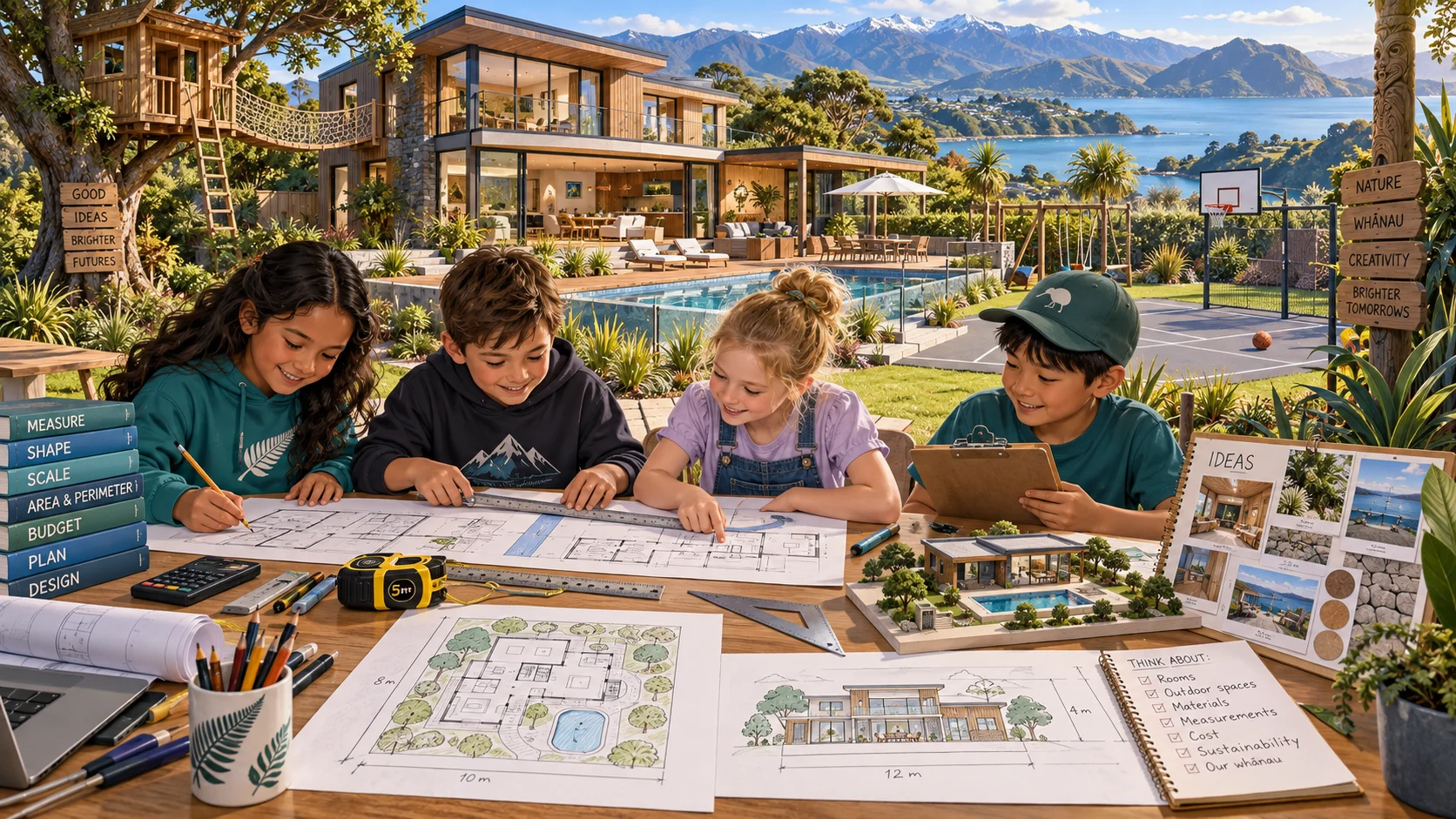
CREATE · CALCULATE · JUSTIFY
Dream Home Designer
Make the maths work, choose a house style, then build a property by placing up to three dream features.
TEACH · TEST THE MATHS FIRST
A good design must satisfy both rules at the same time.
- Area is the space inside the home footprint. It must be at least 20 m².
- Perimeter is the distance around the outside. It must be 22 m or less.
- Example: 5 m × 4 m → area 20 m², perimeter 18 m. It works.
- If either rule fails, change a side and calculate again.
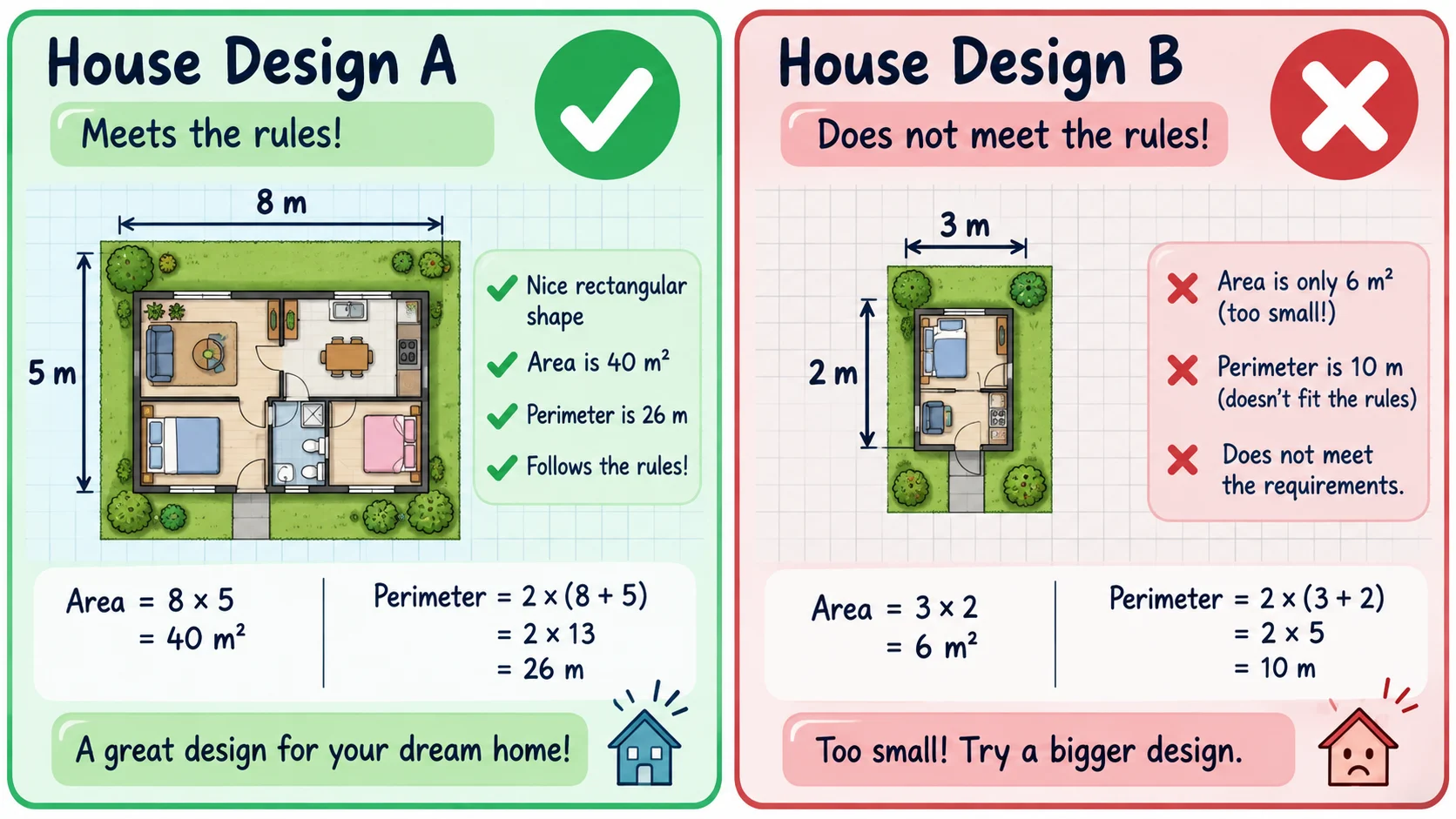
DESIGN RULES Area: at least 20 m² Perimeter: no more than 22 m
4 · DESIGN YOUR PROPERTY
Move your features around the yard.
Press and drag each selected feature anywhere around the property. Lift your finger when you are happy with its position.
0 / 3 features
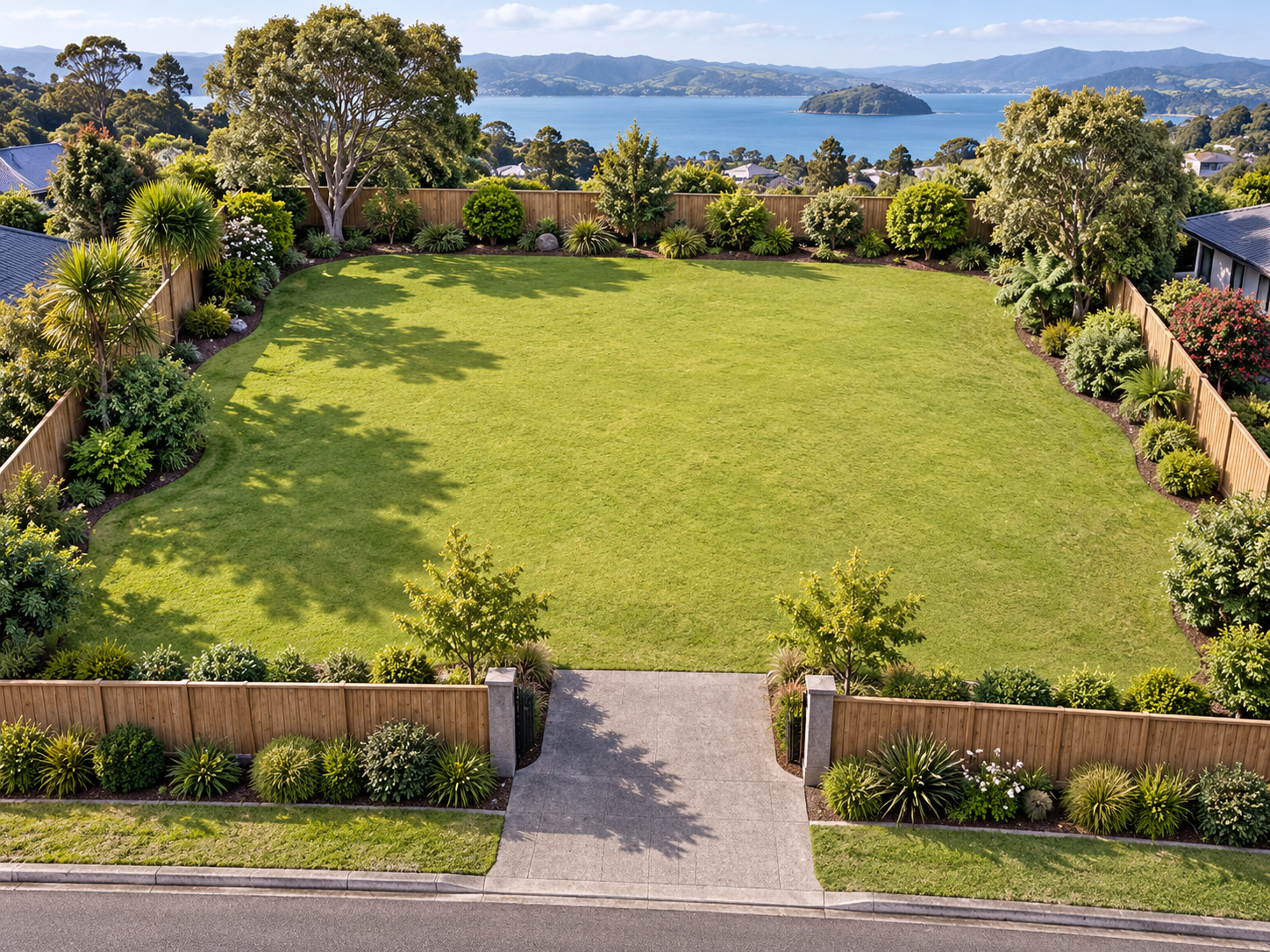
BACK YARD
FRONT YARD
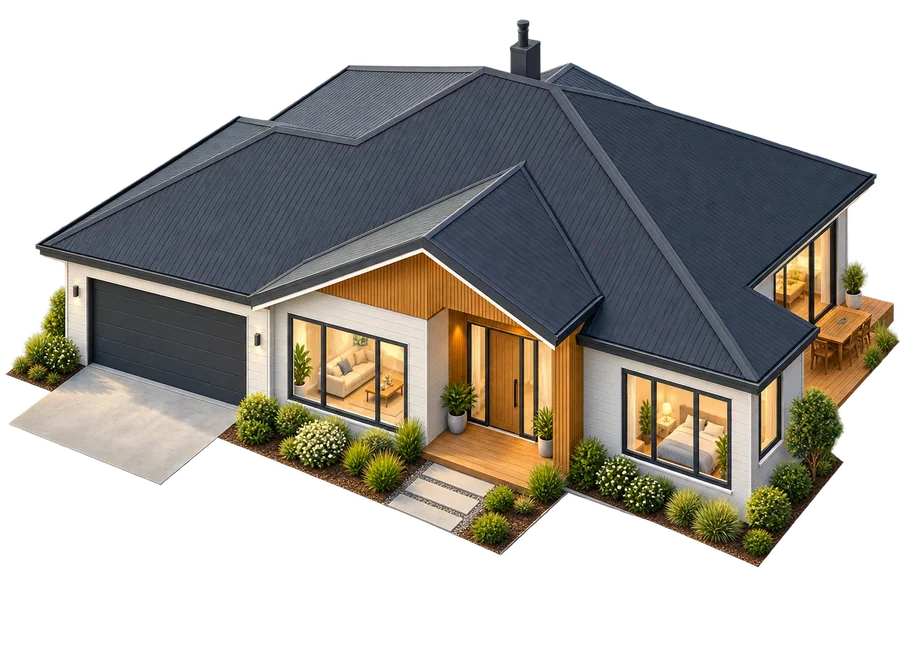
YOUR HOME 6 m × 4 m 24 m²
Your yard is ready. Choose a feature above to add it.
YEAR 5 DEEP DIVE · REQUIRED Complete this deeper Year 5 mahi as part of the mission — not as an optional extra.
Do the main mission first, then complete this section. It is deliberately more independent than Year 4 and is part of your weekly homework workload.
YOU TRY
Choose one room to improve. State a measurable criterion, describe your change and explain how you would test whether it works.
Minimum guide: 70 words. Quality matters: make the reasoning, evidence or design decision clear. □ answers the exact task□ uses specific detail□ ideas are connected□ reread and improved
MATHS
Dream Home Puzzle
06 · Puzzle ArcadePUZZLE CHALLENGE
Rebuild the Dream Home picture. Choose Easy, Medium or Hard, then place every piece in the correct position to complete the puzzle.
ICONIC ARCADE · TERM 2 · WEEK 6
Dream Home Puzzle
Play first · themed challenge · touch friendly DREAM HOME PUZZLE Choose your challenge, then rebuild the dream home.
PIECES0/12
STATUSBUILD IT
CHOOSE YOUR LEVEL Easy · Guided Puzzle 12 pieces with the picture showing underneath.
HOW TO PLAY Drag: move a picture piece onto the matching space. Or tap: tap a piece, then tap the space where you think it belongs.
PUZZLE COMPLETE DREAM HOME COMPLETE! Ka pai — you rebuilt the whole picture.
REFERENCE PICTURE
YOUR PIECES Find where each piece belongs. Correct pieces lock into place.
YEAR 5 DEEP DIVE · REQUIRED Finish the game, then prove the learning in the final rounds.
Do the main mission first, then complete this section. It is deliberately more independent than Year 4 and is part of your weekly homework workload.
YEAR 5 GAME CHECK
Finish the game first, then use the learning from this week to clear these three final rounds.
Week 6 Check In
07 · ClubhouseThis part is about your own learning. There are no right or wrong feelings.
WHAT AM I LEARNING?
Reflect on independence, challenge level and the next useful Year 5 practice step.
YOUR MISSION
Which measurement changed your design decision most?
TEACH · LEARN THE IDEA
Choose what feels true for you, then write one thing you understand better now.
- STEP 1Choose how the week felt.
- STEP 2Write one thing you understand better now.
Week 6 Check In
You designed, measured, read, explained and built. Think about the learning behind your dream home.